
You’ve made the same call seventeen times this month. Each conversation starts with cautious optimism—maybe this daycare center will be different. You explain your child’s needs carefully: the feeding tube that requires management every few hours, the seizure disorder that demands constant monitoring, the medications that must be administered precisely on schedule. There’s always a long pause on the other end of the line. Then come the apologetic words you’ve learned to anticipate: “I’m sorry, but we’re not equipped to handle that level of medical complexity.”
The rejections accumulate like weights. Your employer is growing increasingly impatient with the unpredictable schedule. Family members offer to help but admit they’re terrified of making a medical mistake. The isolation tightens as you realize that the simple solution other parents take for granted—reliable childcare that allows both parents to work—simply doesn’t exist for families like yours.
Late at night, you search desperately online, trying different keyword combinations, hoping to find someone, somewhere, who can actually care for your medically fragile child safely. This search leads many families to discover PPEC (Prescribed Pediatric Extended Care), and suddenly, there’s a possibility where there were only closed doors. But even after finding PPEC, questions linger: Can anyone else really manage the intricacies you’ve mastered through necessity? Will your child receive the watchful attention they need, or just medical management?
This article examines how PPEC of Palm Beach provides something families desperately need—comprehensive care that balances both medical complexity and childhood joy.
What Makes PPEC Different: Where Medical Expertise Meets Childhood
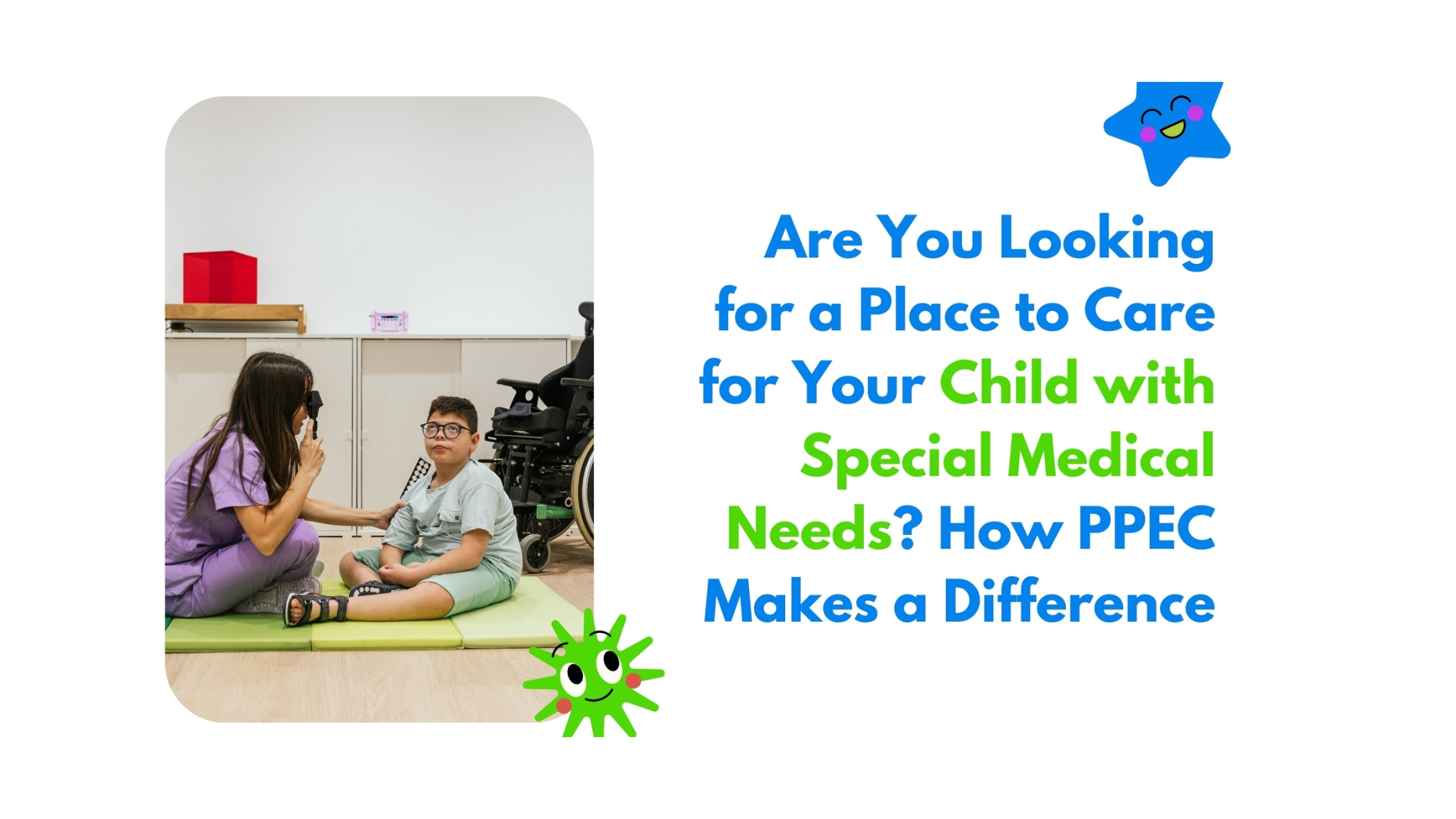
Walk into PPEC of Palm Beach, and the first thing you notice isn’t the medical equipment—it’s the laughter. Children’s artwork covers walls alongside feeding pump schedules. A nurse adjusts a ventilator setting while singing along to a child’s favorite song. Therapy balls sit beside oxygen concentrators. This juxtaposition—serious medical care delivered within genuine childhood experiences—defines what makes PPEC fundamentally different.
This isn’t a hospital setting focused purely on keeping children medically stable. Nor is it standard childcare with a nurse occasionally available when problems arise. PPEC operates in the essential space between these extremes, providing continuous, skilled care while creating an environment where children with special needs can actually experience childhood—play, learning, peer connections, and the joy that should be every child’s right, regardless of medical complexity.
The Nurses Who Become Your Partners
The nurses at PPEC of Palm Beach bring something families searching for pediatric nursing expertise desperately need—clinical skills combined with a genuine understanding that your child is a whole person, not a diagnosis. These Registered Nurses and Licensed Practical Nurses work with medically fragile children daily, developing expertise that goes far beyond textbook knowledge.
They know how to troubleshoot feeding pumps that alarm at inconvenient moments. They recognize the subtle changes in breathing patterns that signal respiratory distress before it becomes obvious. They’ve mastered the art of administering medications to children who can’t swallow pills. They understand which equipment sounds require immediate intervention and which are routine background noise.
But perhaps more importantly, they learn each child’s unique communication style, comfort preferences, and personality quirks. They discover that one child calms with firm pressure while another needs gentle movement. They recognize when a child’s increased agitation signals pain, overstimulation, or simple tiredness. This combination—medical expertise and individualized understanding—transforms clinical care into something closer to what families provide at home.
Ratios That Actually Allow Vigilance
Numbers matter when lives depend on attention. PPEC maintains nurse-to-child ratios around 1:3, meaning when your child needs medical intervention, a nurse is available immediately without compromising other children’s care.
Compare this to standard daycare, where ratios reach 1:12 or higher, and the difference becomes stark. In those environments, caregivers constantly triage competing demands—if one child has a bathroom emergency while another needs assistance eating, someone waits. When your child requires medical attention every few hours, that waiting becomes dangerous.
At PPEC, adequate staffing means your child receives the vigilant monitoring their condition requires. When a feeding tube needs to be flushed, when medications are due, or when equipment alarms sound, someone with proper training responds immediately. For families accustomed to providing one-on-one attention at home, these ratios provide reassurance that professional care approaches the watchfulness they themselves maintain.
More Than Medical Management: Caring for the Whole Child
The calendar on your refrigerator tells a story—physical therapy on Mondays, occupational therapy on Wednesdays, speech therapy on Fridays. Each appointment means driving across town, transferring your child and their equipment in and out of the car, waiting in lobbies, and coordinating schedules with therapists who often don’t communicate with each other. The exhaustion isn’t just physical—it’s the mental weight of being the only person who sees your child’s complete picture.
PPEC changes this fragmented reality into coordinated care where everyone works together toward shared goals.
Therapies That Actually Connect
Physical therapists, occupational therapists, and speech therapists work onsite at PPEC, but more importantly, they collaborate directly with nursing staff. The speech therapist working on oral motor skills shares strategies with nurses who support those techniques during mealtimes. The physical therapist builds core strength, communicating positioning goals that nurses reinforce throughout the day. The occupational therapist addressing sensory needs helps staff understand why certain activities overwhelm your child while others help them regulate.
This integration means therapy doesn’t exist in isolated half-hour blocks—it becomes woven into your child’s entire day. Skills practiced in formal sessions get reinforced during play, meals, and rest times. Therapeutic goals align rather than compete. Progress occurs more quickly because everyone works toward the same objectives with coordinated approaches.
For families, this coordination eliminates the exhausting work of being the sole point of contact between disconnected providers. You’re no longer responsible for explaining the physical therapist’s goals to the speech therapist or ensuring the nurse is aware of new positioning recommendations. That coordination happens naturally within the interdisciplinary team.
Care Plans That Actually Reflect Your Child
The intake process at PPEC involves detailed conversations that might initially feel overwhelming—so many questions about medications, feeding schedules, behavioral patterns, and medical history. But this thoroughness serves a purpose. The resulting care plan becomes a comprehensive guide, ensuring that every staff member understands your child’s unique needs and responds appropriately to changes in their condition.
These aren’t generic templates adapted slightly for each child. They’re individualized documents that specify exactly how your child’s feeding tube should be managed, which medications require refrigeration, how to position them for optimal respiratory function, what behaviors signal discomfort versus overstimulation, and which emergency protocols apply to their specific conditions.
More importantly, these care plans evolve. As medications change, your child’s tolerance improves, and new challenges emerge, the care plan is updated through ongoing communication between PPEC staff and your family. You remain the expert on your child; PPEC staff become partners who implement and support the approaches that work.
Childhood Happens Here
Perhaps the most profound difference PPEC makes is recognizing that children with special needs are children first and foremost. Yes, medical management happens continuously. However, it occurs within a context of story time, music activities, art projects adapted to different ability levels, sensory exploration, and peer interaction.
Your child doesn’t spend the day in medical appointments. They spend it playing, learning, experiencing age-appropriate activities—while nurses ensure medical needs are met seamlessly in the background. This distinction matters deeply. When you pick up your child at the end of the day, they’ve had childhood experiences, not just medical supervision.
The Environment That Makes Everything Possible
PPEC facilities differ in appearance because they serve distinct needs. Wide doorways accommodate wheelchairs alongside staff assisting children who walk unsteadily. Changing tables work for larger children, not just infants. Electrical outlets cluster near adaptive seating where feeding pumps need power. Flooring transitions smoothly, so mobility devices move without catching.
This isn’t just cosmetic accessibility—it’s infrastructure that enables safe care for children with special needs. The oxygen delivery systems, suction machines, feeding pumps, monitoring equipment, emergency supplies, and backup power systems exist because children’s lives depend on them functioning reliably.
Infection control protocols exceed those of standard childcare because PPEC serves immunocompromised children, for whom a common cold could trigger hospitalization. Staff training in equipment sterilization, proper hygiene, and cross-contamination prevention creates the safer environment medically fragile children require.
The physical environment itself conveys a significant message—this space was designed specifically for children like yours. You’re not asking them to squeeze into environments built for typical children, hoping accommodations will be adequate. Everything about PPEC facilities reflects that children with special needs truly belong here.
The Financial Reality That Makes PPEC Accessible
Quality specialized care means nothing if families cannot afford it. PPEC of Palm Beach provides something remarkable—comprehensive, skilled care typically covered entirely by Medicaid for eligible children with special needs.
This isn’t partial coverage requiring substantial copays or out-of-pocket expenses. For families whose children qualify based on medical necessity, PPEC services—the nursing care, integrated therapies, medical supervision, specialized equipment—come at no direct cost. This accessibility transforms what would be financially impossible into genuinely available support.
Beyond direct service coverage, PPEC creates economic value by enabling parents to work rather than sacrificing careers to provide full-time medical care. When both parents can maintain employment because their child receives expert daytime care, family financial stability improves dramatically. The difference between managing and drowning financially often comes down to whether quality, affordable care exists that can safely support your child’s unique needs and complexities.
PPEC also prevents costly hospitalizations by catching problems early before they escalate into emergencies requiring expensive inpatient treatment. Families who previously experienced repeated hospital admissions often see dramatic reductions after consistent PPEC attendance—both because vigilant monitoring prevents complications and because proper daily management keeps conditions stable.
Building Partnership
The relationship between PPEC and families works best when it’s genuinely collaborative. You bring irreplaceable knowledge about your child—their communication style, comfort measures, behavioral triggers, and preferences. PPEC brings medical expertise and experience in caring for many medically complex children.
When these knowledge bases combine through authentic partnership, outcomes improve dramatically. You should feel empowered to share observations, ask questions, and raise concerns. The best care happens when families and professionals work as unified teams, focused on the same priority: your child’s well-being.
Conclusion
The search for appropriate care for children with special needs often feels impossible because standard solutions don’t fit extraordinary circumstances. Traditional childcare cannot manage medical complexity. Home nursing provides clinical care but isolates children. Hospital settings focus on medical management without nurturing childhood experiences. Families find themselves trapped between inadequate options, forced to choose between financial stability and their child’s safety.
PPEC of Palm Beach exists precisely for this gap—providing skilled pediatric nursing alongside comprehensive developmental support in environments specifically designed for children with special needs. The nurses here understand that behind every feeding tube, every ventilator, every medication schedule is a complete child with personality, preferences, and potential.
For families exhausted from managing alone, PPEC offers something precious—a professional partnership that shares the caregiving burden while honoring both medical requirements and childhood joy. Your child receives expert attention from nurses who genuinely care. You gain the ability to work, knowing your child is safe and secure. Your family discovers that sustainable life is possible even with medical complexity.
When you’re searching desperately for a place that can actually care for your child with special medical needs, PPEC represents hope—the real kind, grounded in expertise, infrastructure, and a genuine commitment to seeing children with special needs as complete individuals deserving both excellent medical care and a full childhood experience.
FAQs About PPEC Care for Children With Special Needs
How do I determine if my child is eligible for PPEC services?
Children with special needs typically qualify when they require skilled nursing care, as prescribed by a physician, due to chronic medical conditions or complex healthcare needs. Your child’s doctor initiates the referral, documenting why your child’s medical complexity requires professional nursing supervision that standard childcare cannot safely provide. PPEC coordinators help navigate this process.
What happens during a typical day at PPEC?
Your child receives continuous medical monitoring and nursing care—medications are administered on schedule, feeding regimens are maintained, and equipment is managed—all while participating in age-appropriate activities, therapy sessions, and peer interactions. It’s childhood with medical support seamlessly integrated, not medical management that occasionally allows play. You receive detailed daily reports about everything that happened.
Will my child receive therapy at PPEC?
Yes—physical therapy, occupational therapy, and speech therapy happen onsite as part of integrated care. Therapists work directly with nursing staff, eliminating fragmented care where services don’t connect. This coordination ensures that therapeutic goals are reinforced throughout your child’s entire day, not just during isolated appointments.
Does insurance cover PPEC?
For eligible children with special needs in Florida, PPEC services are typically covered entirely by Medicaid with no copays. This includes all nursing care, therapies, and medical supervision. Coverage requires documentation of medical necessity. PPEC coordinators assist families in navigating authorization and collaborate with physicians to complete the required documentation.
How is PPEC different from regular special needs daycare?
PPEC employs licensed nurses who provide continuous medical supervision, whereas regular daycare employs educators without medical training. PPEC maintains ratios of around 1:3, compared to 1:12 or higher elsewhere. PPEC has medical equipment, integrated therapies, and emergency protocols that standard centers lack. The difference lies in the gap between medical care and educational support—both are important, but children with special needs requiring skilled nursing need PPEC-level expertise.