
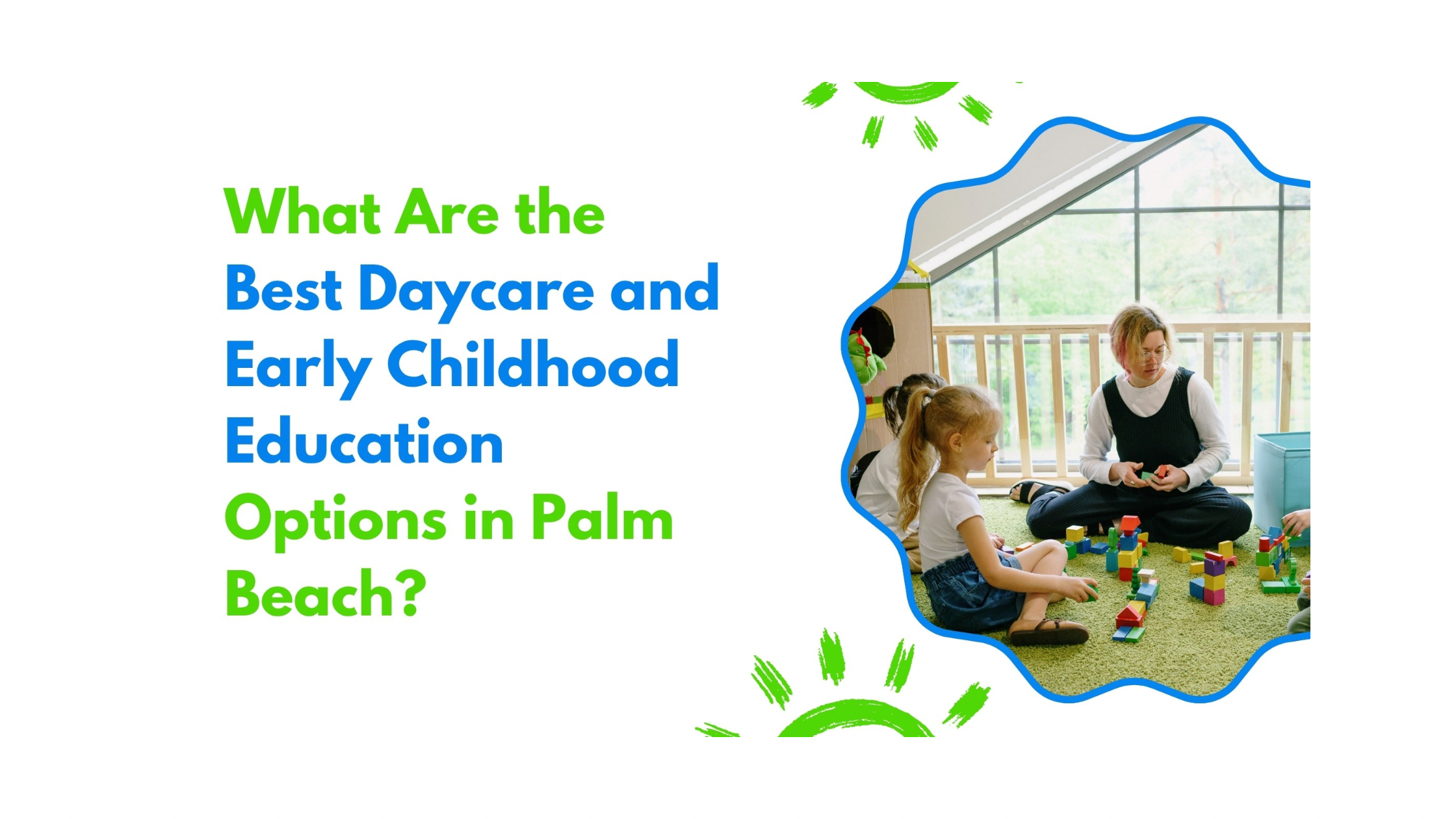
Choosing the right daycare and early childhood education program is one of the most consequential decisions a parent makes, and in Palm Beach County, the range of options can feel overwhelming. From Montessori programs and state-funded VPK to inclusive preschools and specialized medical daycare, each setting serves a different child, a different family, and a different set of needs.
The right answer depends entirely on your child. A healthy, typically developing four-year-old and a medically fragile toddler need fundamentally different environments to thrive. This guide walks through the primary categories of daycare and early childhood education available in Palm Beach, what each offers, and how to identify the right fit for your family.
Why is Early Childhood Education Important?
Before evaluating options, it helps to understand what’s at stake. Research consistently shows that high-quality early childhood experiences during the first five years of life have lasting effects on cognitive development, social skills, academic readiness, and even long-term health outcomes. These foundational years play a crucial role in child development, shaping how children learn, interact, build relationships, and develop essential skills for the future. The Palm Beach County School District recognizes this through its robust early learning infrastructure, including its Early Childhood Education department, which administers Florida’s Voluntary Prekindergarten (VPK) program across elementary schools countywide and oversees Head Start and Early Head Start services for eligible families.
Early childhood education is structured, intentional developmental support that prepares children for kindergarten, builds social-emotional foundations, and gives parents the confidence that their child is growing, not just being watched.
Types of Daycare and Early Childhood Education in Palm Beach
1. Private Daycare Centers
Private daycare centers form the backbone of Palm Beach’s early childhood landscape. These centers serve children from infancy through school age and offer structured programming across developmental domains.
Kingswood Academy, with four locations across Palm Beach County, is one of the county’s prominent private early childhood education providers. The academy offers programs from six weeks through VPK and school-age aftercare, making it a practical option for working families who need continuous care across different age groups.
Palm Beach Preschool (pb-schools.com) has operated for more than 50 years across Lake Worth, West Palm Beach, Greenacres, and Palm Springs. With a focus on kindergarten readiness and heart-centered learning, it’s a trusted option for families seeking a nurturing environment with an established track record.
KinderCare operates a center in Greenacres serving children from six weeks to five years, providing structured early education with professional oversight for infants, toddlers, and preschoolers.
Private daycare centers are generally appropriate for typically developing children whose care needs fall within standard childcare licensing requirements.
2. Montessori Programs
For families who prefer a child-led, discovery-based learning philosophy, Montessori programs offer a well-established approach to early education. Guidepost Montessori at Palm Beach Gardens is among the area’s recognized Montessori providers, offering programs from infancy through preschool age.
The Montessori model emphasizes independence, mixed-age classrooms, and intrinsically motivated learning rather than structured, teacher-directed instruction. For children who thrive with freedom of movement and self-directed exploration, Montessori can be a powerful early education environment.
3. Florida’s Voluntary Prekindergarten (VPK) Program
Florida’s VPK program is a free early childhood education option available to every four-year-old in the state, regardless of family income. Administered in Palm Beach County through the Early Learning Coalition of Palm Beach County, VPK prepares children for kindergarten through early literacy, pre-math skills, scientific thinking, and social development.
The Palm Beach County School District offers several VPK program models, including VPK Title I (free full-day for eligible families), VPK Head Start (free year-round with extended hours for families meeting federal poverty guidelines), and VPK Migrant Education programs. For families whose children qualify, these programs represent an accessible, high-quality entry point into structured early education at no cost.
Importantly, the Early Learning Coalition also administers VPK Specialized Instructional Services (VPK SIS), a VPK option for four-year-olds with disabilities who have a current Individualized Education Plan (IEP). This is a meaningful bridge for children with special needs as they approach kindergarten.
4. Inclusive Preschools for Children With Special Needs
For children with developmental delays, mild special needs, or disabilities who can safely be served in a standard educational setting, inclusive preschool programs offer a middle ground between typical daycare and specialized care.
RCCA Preschool, located in Palm Beach, offers an inclusive setting serving children with and without special needs together. With a special education certified teacher, licensed occupational, physical, and speech therapists on staff, and low student-to-teacher ratios, RCCA provides a more supported environment than standard daycare without requiring the intensive medical infrastructure of a specialized facility. This type of inclusive setting suits children with developmental differences whose needs don’t include complex medical management
5. Specialized Medical Daycare for Medically Fragile Children
For families with medically complex children, children who require skilled nursing oversight, use medical equipment such as ventilators or feeding tubes, or have conditions like seizure disorders that demand immediate clinical response, none of the above options are safe, appropriate, or legally equipped to provide care.
This is where Prescribed Pediatric Extended Care (PPEC) is the only category of daycare and early childhood education dedicated to serving children with special needs.
PPEC of Palm Beach provides comprehensive daytime care for medically fragile children, combining continuous licensed nursing oversight with integrated physical, occupational, and speech and feeding therapies, and structured developmental programming, all within one coordinated facility. Unlike standard daycare or even inclusive preschools, PPEC is specifically licensed, staffed, and designed for children whose medical needs require clinical management throughout the entire day.
PPEC of Palm Beach serves the same developmental mission as every other early childhood education option on this list, helping children grow, learn, communicate, and connect, but within a framework that never compromises the medical safety of children who need it most. Services are primarily covered through Medicaid, making them accessible to eligible families.
How to Choose the Right Option for Your Child
With this range of options available in Palm Beach, the most important step is an honest assessment of your child’s needs rather than comparing program features in the abstract. A useful framework:
- Typically developing children whose care needs fall within standard licensing parameters are well-served by private daycare centers, Montessori programs, and VPK options
- Children approaching kindergarten age should explore Florida’s free VPK program, which is available through the Early Learning Coalition of Palm Beach County, regardless of family income.e
- Children with mild developmental differences or disabilities who can safely participate in a standard educational environment benefit from inclusive preschool programs like RCCA Preschool, which integrate therapeutic support within a typical classroom setting.
- Children with complex medical needs, technology dependence, or conditions requiring skilled nursing oversight need a PPEC program, not because other options don’t care, but because they are structurally unable to provide safe care for this population.
Beyond your child’s specific needs, practical factors matter too. Consider program hours relative to your work schedule, transportation availability, proximity, Medicaid or subsidy eligibility, and the facility’s communication culture. A program with access to experienced professionals, including a pediatric physical therapist who understands your child’s mobility and developmental goals, can provide valuable support as part of a comprehensive care plan. The best program is the one that meets your child’s developmental and medical needs while supporting a sustainable family life.
The Overlap Between Daycare and Early Education
One common misconception is that “daycare” and “early childhood education” are separate categories, that care and learning happen in different places. The best programs in Palm Beach, across every category, reject this divide. Whether it’s a Montessori guide supporting an infant’s natural development, a VPK teacher building kindergarten readiness, or a PPEC nurse and occupational therapist reinforcing developmental goals through daily activity, quality early childhood programs understand that care and learning are inseparable.
Every hour a child spends in a safe, supportive, stimulating environment is an hour of developmental investment. Choosing a program that takes this seriously, at whatever level of medical support your child requires, is one of the most important decisions you’ll make for your child’s future.
Conclusion
Palm Beach County offers a genuinely strong landscape of daycare and early childhood education options, from well-established private centers and free VPK programs to inclusive preschools and specialized medical daycare. For children with complex medical needs, specialized care pediatrics PPEC programs provide a unique blend of medical support, developmental activities, and nurturing care in a child-focused environment. The right choice depends on your child’s developmental profile, medical needs, and your family’s practical circumstances.
If your child is medically fragile and requires continuous skilled nursing care alongside early education, PPEC of Palm Beach provides the specialized program that makes both possible. Reach out to our team to learn about eligibility, services, and how our coordinated approach to early childhood care can support your child and your entire family.
FAQs
What types of daycare and early childhood education are available in Palm Beach?
Palm Beach County offers private daycare centers, Montessori programs, Florida’s free Voluntary Prekindergarten (VPK) program, inclusive preschools for children with special needs, and Prescribed Pediatric Extended Care (PPEC) for medically fragile children. Each serves a different population, and the right choice depends on your child’s developmental needs, medical complexity, and your family’s practical requirements.
Is there free early childhood education available in Palm Beach?
Yes. Florida’s Voluntary Prekindergarten (VPK) program is free for all four-year-olds in the state, regardless of family income. The Early Learning Coalition of Palm Beach County administers VPK enrollment, and the Palm Beach County School District offers several program models, including full-day options for eligible families. Head Start programs are also available to families who meet federal income guidelines.
What is the best daycare option for a child with special needs in Palm Beach?
It depends on the nature and complexity of your child’s needs. Children with mild developmental differences or IEPs approaching kindergarten can benefit from inclusive preschool settings that integrate therapeutic support. Children with complex medical conditions requiring skilled nursing care throughout the day need a PPEC program, as standard daycare and preschool settings are not licensed or equipped to safely manage technology-dependent or medically fragile children.
How is PPEC different from other special needs daycares in Palm Beach?
PPEC is specifically licensed for medically fragile children and employs licensed nursing staff throughout the program day. Unlike inclusive preschools or standard special needs daycare, PPEC can manage ventilators, feeding tubes, seizure protocols, and other complex medical needs. It also integrates physical, occupational, and speech therapy into daily programming, providing comprehensive developmental support alongside medical management in one coordinated setting.
How do I find out if my child qualifies for PPEC in Palm Beach?
PPEC eligibility requires a physician’s prescription documenting medical necessity and Medicaid enrollment. The PPEC of Palm Beach team assists families with understanding eligibility criteria, verifying coverage, and navigating the enrollment process. Reach out directly to begin the conversation. The team is experienced in guiding families through every step from initial inquiry to enrollment.