
What is Pediatric Speech Therapy?
Pediatric speech therapy is specialized care that helps children develop the skills they need to communicate, connect, and safely eat and drink. Provided by trained speech-language pathologists, this therapy addresses a wide range of needs unique to each child, always tailored to their age and stage of development.
Our speech therapists help your child produce clearer sounds and words, understand language, and express thoughts, needs, and ideas. They also address voice and fluency concerns, including stuttering. When appropriate, they support augmentative and alternative communication (AAC), such as gestures, picture boards, or speech-generating devices, to help your child communicate in ways that work for them.
Speech therapy also includes feeding and swallowing support for children who struggle with food textures, chewing, or swallowing safely. For children receiving enteral nutrition through a G-tube, J-tube, or NG-tube, therapists work with nurses and physicians on feeding goals, including oral feeding when appropriate. Learn more on our About Us page.

Signs Your Child May Need Speech Therapy
Speech, language, and feeding concerns may arise alongside medical needs requiring skilled nursing care. Within our PPEC program, therapists and nurses work together to recognize these concerns and support timely intervention. Signs your child may benefit from a speech-language evaluation include:
- Delayed speech, such as speaking later than expected or using fewer words than other children their age.
- Difficulty understanding language, including trouble following directions or responding to questions.
- Trouble pronouncing sounds, making speech hard for family members or others to understand.
- Social communication challenges, such as difficulty taking turns, making eye contact, or engaging in back-and-forth interaction.
Our speech-language pathologists also work closely with our nursing team to address feeding difficulties affecting your child's nutrition and comfort, including:
- Feeding and swallowing concerns, including coughing, choking, or discomfort during meals.
- Food or texture aversion, resisting certain foods based on how they feel, look, or taste.
- Difficulty managing foods of different consistencies, from purees to solids.
- A need for support developing oral feeding skills while receiving tube feeding, when medically appropriate.
If you notice any of these signs in your child, our team is here to help. Learn more about getting started on our Admissions page.
Conditions That Commonly Qualify for Speech Therapy
Children with the following conditions may benefit from speech therapy. A diagnosis alone does not establish PPEC eligibility. Our enrollment requires qualifying complex medical needs and a physician-prescribed plan of care.
- Neurological conditions, such as cerebral palsy
- Musculoskeletal conditions
- Developmental delays
- Down syndrome
- Autism Spectrum Disorder
- Feeding disorders
Speech therapy complements our Occupational Therapy, Physical Therapy, and Behavioral Therapy options, supporting your child’s interconnected needs within their PPEC care plan.
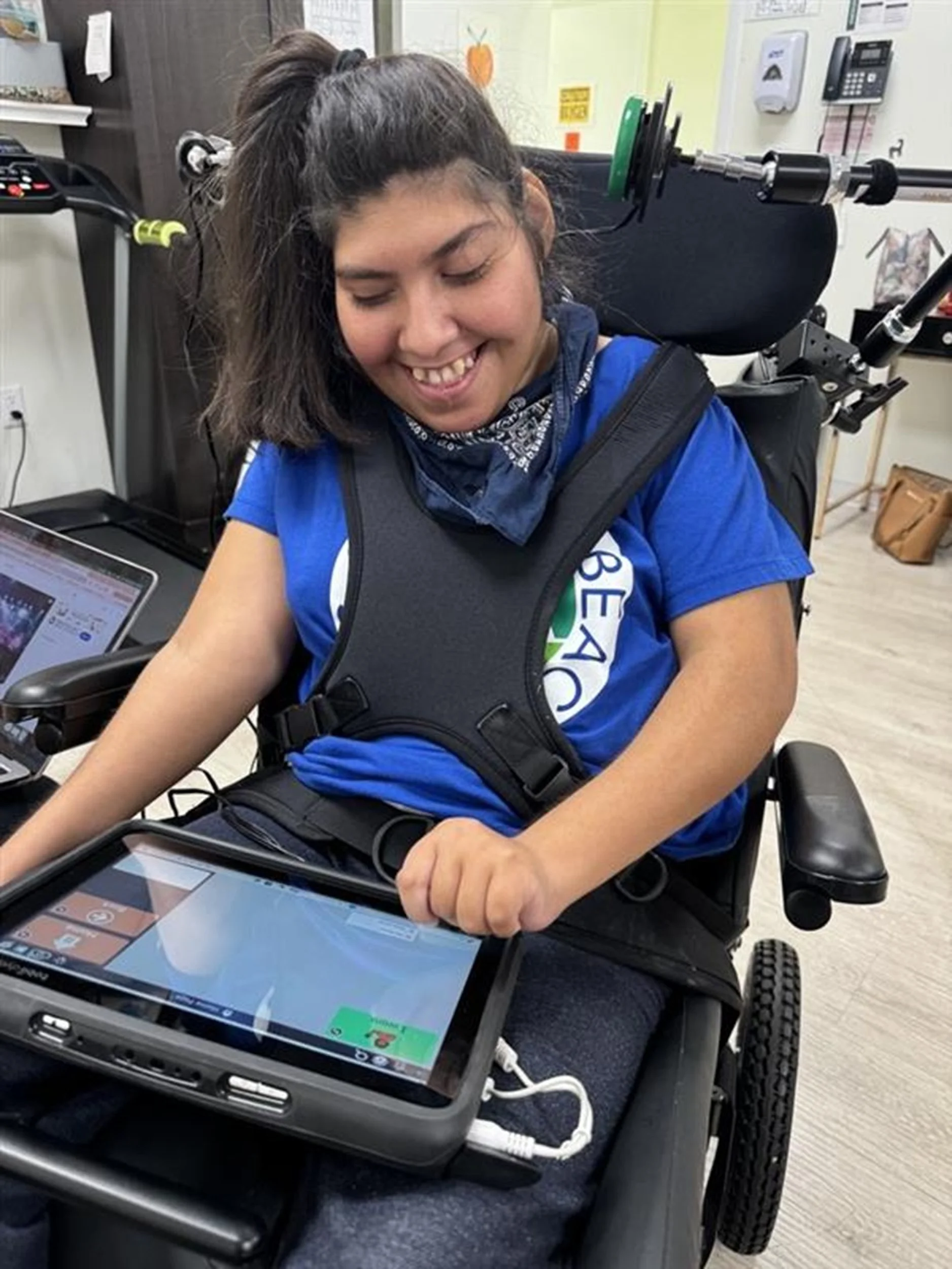
Benefits of Speech Therapy
Speech therapy offers meaningful benefits that reach well beyond the therapy room, supporting your child’s growth, independence, and everyday quality of life.

Improved Communication
Our therapists help your child develop the ability to understand others and express their own needs, thoughts, and feelings. Whether through spoken words or alternative communication methods, stronger communication skills open the door to deeper connections with family, caregivers, and peers.

Learning and Participation
Speech and language skills help your child follow directions, make choices, and take part in shared activities. We build these abilities at your child’s pace, supporting participation in play, learning, and school routines when appropriate.

Greater Confidence
As your child becomes better able to communicate and be understood, they often gain confidence in themselves. This growing self-assurance encourages them to participate more fully in play, learning, and social interaction.

Family Participation
Speech therapy is most effective when families are involved. We partner with you to reinforce your child’s goals at home, giving you the tools to actively support their progress. To see how speech therapy fits within the full scope of care we offer, visit our Services Overview.
Feeding and Swallowing Improvements
For children with feeding challenges, therapy can make mealtimes safer and more comfortable. Our therapists work to improve your child’s ability to eat a variety of foods and, when appropriate, support the transition away from tube feeding toward oral nutrition.
Our Speech Therapy Approach at PPEC
At PPEC of Palm Beach, getting to know your child is the first step in providing meaningful, effective speech therapy. Our approach is thorough, individualized, and centered on your child’s unique needs and your family’s goals.

Comprehensive Evaluation

Individualized Care Plan

Multidisciplinary Collaboration

Monitoring Progress

Family Education
Our Therapy Process
We strive to make the path to speech therapy clear and reassuring for every family. From the first referral to ongoing progress, here is what you can expect when your child receives care with us:
Ready to begin?
Visit Our Admissions Page →