
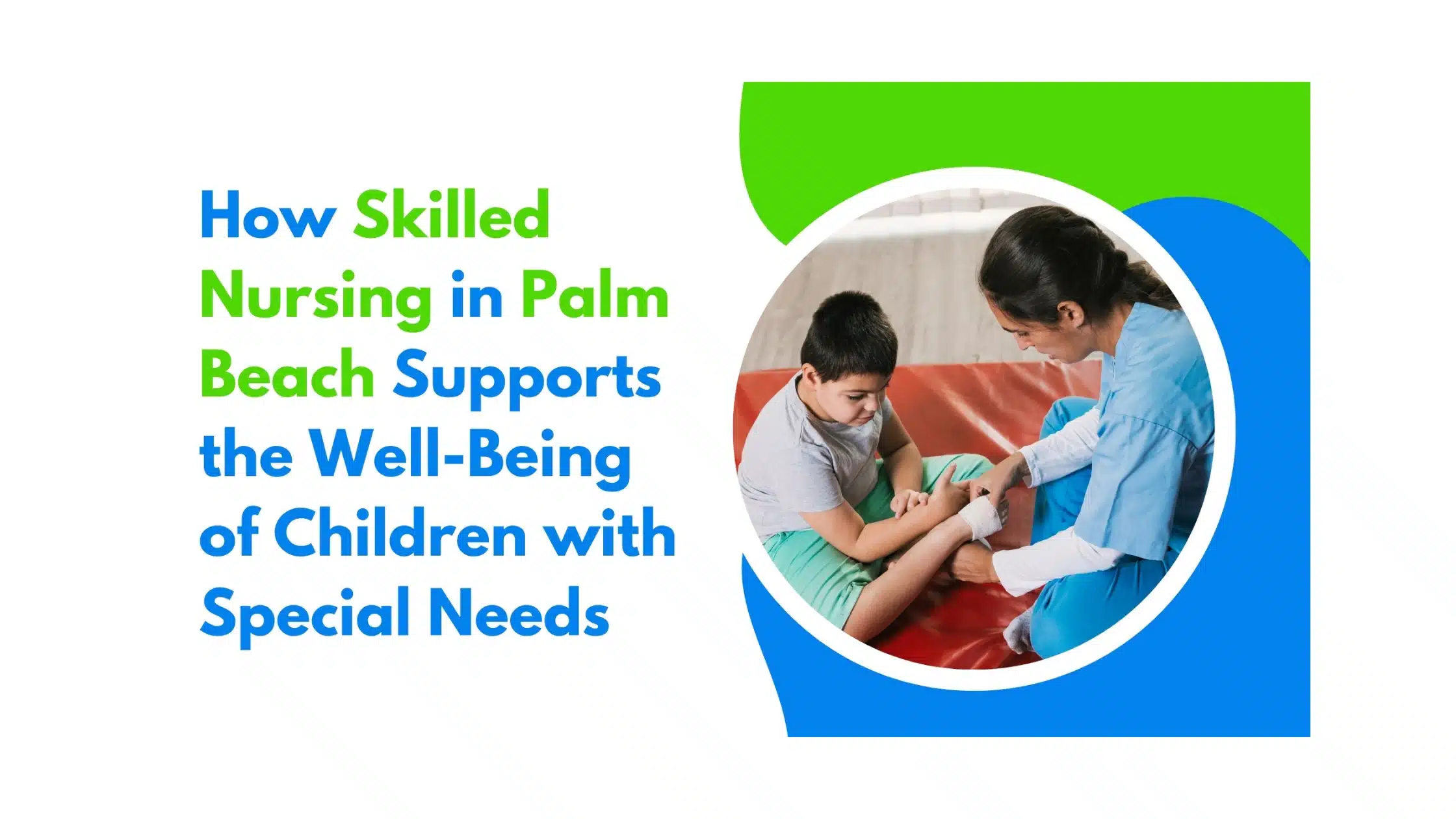
As parents of Children with Special Needs, we know our child needs more than what typical childcare can provide, and often this is more than just medical management. You’ve watched them light up during rare moments of play, noticed how they respond to music or gentle touch, and seen glimpses of their personality that medical appointments often overlook or fail to support. Yet most of the care options you’ve explored focus exclusively on keeping your child medically stable. They monitor vitals, administer medications, and manage equipment, without addressing the fact that your child is a whole person with emotional needs. They need social potential, developmental capacity, and a fundamental human need for joy, connection, and experiences that make life meaningful beyond mere survival.
Traditional skilled nursing keeps your child alive, which is essential. Children with Special Needs also deserve opportunities to develop relationships, experience childhood pleasures, build skills at their own pace, and feel valued as whole people rather than collections of medical conditions requiring management. You want them to experience a quality of life that includes but extends far beyond medical stability. And if you are struggling to find care that truly addresses your child’s comprehensive wellbeing, here’s how Skilled Nursing in Palm Beach can help:
Understanding Wellbeing: More Than Just Medical Stability
Well-being for Children with Special Needs encompasses far more than the absence of medical crises or maintenance of stable vital signs. True wellbeing includes physical health and medical stability, emotional security and psychological health, social connection and relationship capacity. It also provides space for cognitive stimulation and developmental progress, sensory experience, and environmental comfort, as well as opportunities for joy, play, and cherished childhood memories. Here’s how well-being is different from medical stability:
Quality of life is the ultimate goal: Medical interventions exist to improve children’s quality of life, not as ends in themselves. A child who is medically stable but isolated, unstimulated, and emotionally distressed isn’t truly thriving despite meeting clinical health markers.
Development continues regardless of medical complexity: Children’s brains continue to develop—forming neural connections, building skills, and establishing patterns—throughout childhood. Neglecting developmental support during years consumed by medical management creates deficits that affect lifelong functioning and potential.
Emotional health affects physical health: Chronic stress, isolation, and emotional distress actually worsen medical outcomes. Children who are emotionally well tend to have better immune function, improved cooperation with medical care, and sometimes even better physiological stability than children who are emotionally distressed despite similar medical conditions.
Social connection is a fundamental human need; humans are social beings, regardless of their medical complexity or developmental level. Isolation causes psychological harm even when all physical needs are met. Children with Special Needs aren’t exceptions to this fundamental human requirement for connection and belonging.
Childhood experiences shape lifelong wellbeing: The experiences children have during developmental years—whether they feel loved and valued, experience joy and play, form relationships, or feel isolated and defined only by medical conditions—create foundational self-concepts and emotional patterns that persist throughout life.
3 Ways Comprehensive Skilled Nursing Supports Complete Wellbeing
1. Integrates Medical Management with Developmental Support
Rather than treating medical care and development as competing priorities, quality special needs nursing care recognizes these as interconnected aspects of comprehensive wellbeing that should work together, not in isolation.
How integration works in practice:
Skilled nurses understand developmental goals and provide medical care in ways that support rather than hinder development. Positioning for respiratory management also considers motor development goals. Feeding tube management integrates with oral motor therapy objectives when appropriate. Medical schedules accommodate developmental activities rather than consuming entire days.
Therapeutic activities embedded throughout medical care:
Rather than children passively receiving medical procedures, nurses incorporate developmental elements into medical routines. Talking to children during procedures supports language exposure. Offering choices when medically possible supports the development of autonomy. Positioning changes for medical reasons also provide varied sensory and motor experiences.
Coordination between medical and therapeutic teams:
Nurses communicate regularly with physical, occupational, and speech therapists to understand goals and reinforce therapeutic activities throughout the day. When therapists recommend specific positioning, exercises, or communication strategies, nurses implement these consistently rather than medical care happening separately from therapeutic goals.
Medical stability that enables developmental participation:
Skilled Nursing in Palm Beach that maintains children’s medical stability creates the physiological foundation necessary for developmental engagement. Children who are well-managed medically have the energy and capacity to participate in activities, interact socially, and learn—opportunities that are often lost when medical management is inadequate. Children spend their time in distress or crisis.
When medical management and developmental support work together, children make faster progress than when receiving either in isolation. Medical stability enables participation in developmental activities, while cognitive stimulation and social engagement often improve medical outcomes by reducing stress, increasing motivation, and supporting overall health.
2. Facilitates Social Connection and Peer Relationships
Isolation is one of the greatest threats to well-being for Children with Special Needs. Special needs nursing care that truly supports comprehensive wellbeing creates opportunities for social connection and facilitates peer relationships that would otherwise be impossible, given children’s medical complexity.
Creating inclusive peer communities:
When skilled nursing happens in group settings rather than isolated one-on-one care, children have natural opportunities for peer interaction. Quality programs create mixed-ability communities where children with varying medical needs and developmental levels interact daily, learning that differences are normal and that all children can belong and contribute.
Facilitating social interactions across abilities:
Skilled nurses help children interact with peers despite communication challenges, physical limitations, or social skill deficits. They might interpret one child’s communication for peers, position children so they can see and interact with each other, facilitate turn-taking in activities, or explicitly teach social skills that other children grasp intuitively.
Supporting various communication methods in social contexts:
For non-verbal children or those using alternative forms of communication, nurses ensure that communication devices, sign language, or other methods are available and utilized during social activities. They model for peers how to interact with children who communicate differently, normalizing varied communication methods and ensuring all children can participate socially.
Structured and unstructured social opportunities:
Group activities, such as circle time, music, art projects, and sensory play, provide frameworks for social interaction with adult support. Free play periods allow natural social connections to emerge, with nurses gently facilitating when needed but also stepping back to let children interact independently.
Celebrating peer relationships and friendships:
When children show a preference for certain peers, demonstrate care for each other, or develop genuine friendships, skilled nurses recognize and celebrate these relationships as the profound achievements they represent for children who might otherwise experience only isolation.
Children who experience genuine peer relationships show accelerated communication development motivated by the desire to interact with peers, improved emotional regulation through social engagement and peer modeling, a stronger sense of belonging and self-worth, reduced behavioral issues often stemming from isolation, and dramatically improved quality of life through friendship and community.
3. Provides Sensory Experiences and Cognitive Stimulation
Children’s brains require input—such as sensory experiences, cognitive challenges, and novel stimuli—to develop optimally. Medically complex children nursing focused only on medical management often leaves children in sensory-deprived environments without the cognitive stimulation essential for development.
Rich sensory environments:
Quality special needs nursing care provides varied sensory experiences throughout children’s days, including visual stimulation through colors, movement, and varied environments; auditory input through music, language, and environmental sounds; tactile experiences with different textures, temperatures, and materials; vestibular and proprioceptive input through position changes and movement; and olfactory experiences through varied scents in safe, appropriate ways.
Age-appropriate cognitive activities:
Rather than children spending days passively receiving medical care, comprehensive skilled nursing includes activities that stimulate cognitive development at each child’s level. These might include cause-and-effect toys for children learning basic concepts, sorting and matching activities for developing categorization skills, storytelling and books for language development, problem-solving challenges appropriate to the developmental level, and creative activities such as art or music that engage multiple cognitive processes.
Varied experiences and environmental changes:
Rather than children remaining in a single location all day, quality programs provide varied experiences—different rooms or areas, outdoor time when medically appropriate, special events and celebrations, and exposure to diverse people and situations that provide cognitive stimulation and prevent sensory deprivation.
Intentional engagement rather than passive care:
Skilled nurses actively engage children throughout the day rather than providing care to passive recipients. They engage children during routines by narrating activities, singing songs, playing games, and creating opportunities for interaction and response that keep children cognitively engaged, rather than withdrawn or unstimulated.
Individualize, appropriate to each child’s level:
Recognizing that children have vastly different cognitive abilities and developmental levels, qualitatively complex children’s nursing provides stimulation appropriate to each child’s capacity. A developmentally young child receives foundational sensory and cause-and-effect experiences while a more advanced child receives age-appropriate learning activities—both receiving cognitive stimulation matched to their needs.
Children who receive regular cognitive stimulation and varied sensory experiences exhibit improved attention and engagement, accelerated skill development across multiple domains, reduced behavioral issues stemming from boredom or under-stimulation, stronger neural development and brain plasticity, and an overall improved quality of life through engagement with their environment.
How Skilled Nursing at PPEC of Palm Beach Supports Complete Wellbeing
At PPEC of Palm Beach, we fundamentally reject the limited notion that skilled nursing means only medical management. Our entire philosophy centers on supporting children’s complete well-being—medical, emotional, social, cognitive, and experiential—because we recognize that quality of life encompasses far more than stable vital signs.
Medical Excellence as Foundation, Not Totality
Our licensed nursing staff provides expert medical care, including medication administration, equipment management, monitoring, procedures, and emergency response, with the competence and vigilance that keep children medically stable and safe. This medical excellence is essential, but we view it as the foundation that enables comprehensive wellbeing, not the totality of what children need.
Medical care provided with developmental awareness:
Our nurses understand that how they provide medical care affects children’s overall well-being. They position children in ways that support both medical and developmental goals, involve children in their care through age-appropriate explanation and choices, provide emotional comfort alongside medical procedures, and schedule medical tasks to accommodate developmental activities rather than consuming entire days with medical routines.
Relationship-Based Care Model
We prioritize consistent staffing so Children with Special Needs develop relationships with nurses who know them individually—their personalities, preferences, communication styles, sources of comfort and joy. These relationships provide emotional security and ensure personalized care that addresses each child’s unique needs beyond standardized medical protocols.
Seeing children, not just patients:
Our staff recognize and value each child’s individuality—noticing what makes them smile, what they enjoy, how they communicate their preferences, their emerging skills, and their interests. Children experience being valued as whole people whose personalities, feelings, and experiences matter beyond their medical conditions.
Integrated Developmental Programming
Our Skilled Nursing in Palm Beach happens within comprehensive programming that includes physical, occupational, and speech therapy integrated throughout the day; age-appropriate educational activities and cognitive stimulation; structured and unstructured social opportunities with peers; creative activities including music, art, and sensory experiences; and outdoor time and varied environments when medically appropriate.
Comprehensive daily experiences:
Children’s days include medical management seamlessly integrated with play, learning, social interaction, and experiences that support development across all domains simultaneously, rather than medical care happening in isolation from life and learning.
Inclusive Community Environment
We create peer communities where children with varying medical needs and abilities interact daily, experiencing the social connection and belonging essential to emotional well-being. Medical equipment, communication devices, and physical differences are normalized aspects of our environment rather than barriers to inclusion.
Social connection woven throughout the day:
Social opportunities arise naturally during group activities, mealtimes, play periods, and transitions, rather than being isolated in “social skills training.” Children learn social behaviors and develop relationships through natural daily interactions facilitated by skilled staff.
Family Partnership Supporting Whole-Child Wellbeing
We work with families to support not just medical management but emotional health, social development, and overall quality of life. We share observations about children’s happiness, engagement, social interactions, and developmental progress—not just medical status—recognizing that families care about their children’s complete well-being.
Conclusion
Does your child require specialized nursing care that addresses their overall well-being, not just medical management? At PPEC of Palm Beach, we provide expert medical care from licensed nurses who maintain your child’s stability and safety while simultaneously supporting their emotional security, social development, cognitive stimulation, and opportunities for joy and childhood experiences. Our comprehensive approach recognizes your child as a whole person, whose medical needs are important but don’t define their entire existence—supporting them to not just survive but genuinely thrive across all aspects of well-being that create a quality of life worth celebrating.
FAQs About Comprehensive Skilled Nursing for Children with Special Needs
How is comprehensive skilled nursing different from regular skilled nursing?
Regular skilled nursing typically focuses almost exclusively on medical management, including medications, equipment, monitoring, and procedures. Comprehensive medically complex children’s nursing provides all these medical services but within programs that simultaneously address children’s emotional, social, cognitive, and experiential needs through integrated therapeutic services, educational activities, social opportunities, and attention to quality of life beyond medical stability. The medical care is the same or better; the difference is recognizing that children need more than just medical management to truly thrive.
My child has very significant medical needs. Can they still benefit from developmental and social activities?
Absolutely. Children with Special Needs, including those with the most complex medical needs, benefit from emotional security, appropriate cognitive stimulation, social awareness and connection, sensory experiences, and opportunities for enjoyment at their individual level. Comprehensive programs adapt activities to accommodate medical complexity rather than excluding children based on medical needs. The goal is to provide developmental support appropriate to each child’s abilities within the context of necessary medical management.
Will focusing on wellbeing beyond medical management compromise medical safety?
No. Quality comprehensive programs provide excellent medical management as the foundation that enables all other activities. Medical safety is never compromised; rather, activities are designed to occur safely within children’s medical capabilities. In fact, children who experience comprehensive wellbeing support through Skilled Nursing in PaBeach often have better medical outcomes because emotional security, reduced stress, and engagement support overall health.
How do I determine whether a skilled nursing program genuinely supports comprehensive well-being?
Visit programs and observe: Do you see children engaged in varied activities or primarily receiving medical care passively? Does the environment feel child-centered, with toys, colors, and comfort, or is it primarily clinical? Do staff interact warmly with children as individuals? Ask directly about their approach to emotional well-being, social development, and quality of life beyond medical management. Quality special needs nursing care programs can articulate specific ways they support comprehensive wellbeing, not just describe medical capabilities.
Does insurance, such as medical-only nursing, cover comprehensive skilled nursing?
For children who qualify for PPEC services through Medicaid in Palm Beach, comprehensive programs, including medically comprehensive nursing, therapy, and developmental activities, are typically fully covered at no cost to families. This often makes comprehensive care more accessible than cobbling together separate medical and developmental services. For private insurance, coverage varies significantly, so verification of benefits with your specific insurance plan is essential before enrollment.