
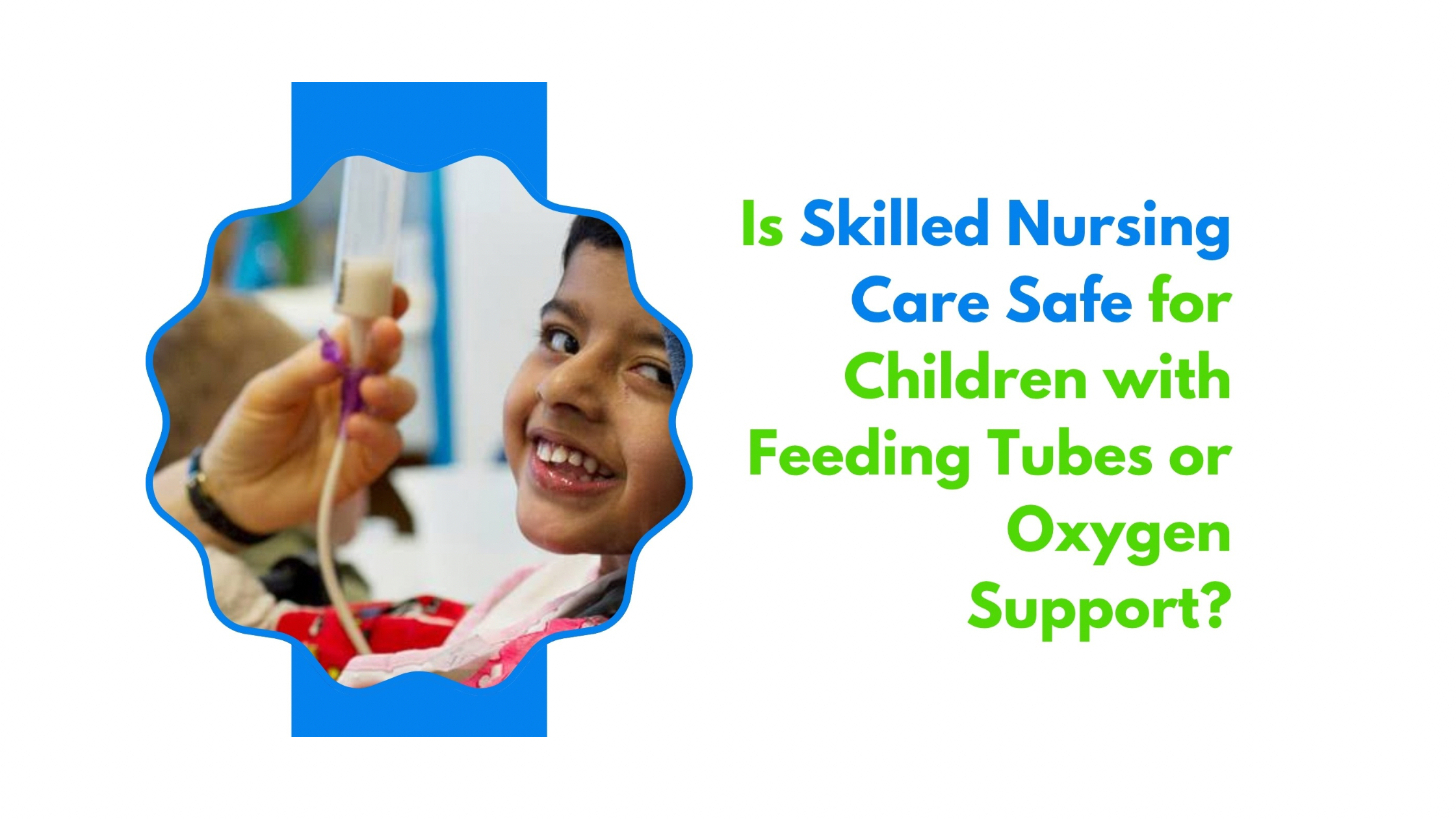
The moment a doctor says “your child will need a feeding tube” or “they’ll require supplemental oxygen,” a quiet fear settles in that never entirely goes away. Every new environment becomes a risk calculation. Every caregiver becomes a question mark. And the idea of sending your child somewhere outside the home, somewhere without you standing watch, can feel genuinely terrifying.
But here’s what most families don’t know until they find the right program: skilled nursing care wasn’t designed for typical children with typical needs. It was designed precisely for children like yours. And when it’s done right, it doesn’t just keep your child safe, it gives you back something you may not have felt in a long time: confidence.
What Makes a Child’s Needs “Medically Complex”?
Children who rely on feeding tubes, gastrostomy tubes (G-tubes), nasogastric tubes, or supplemental oxygen have what healthcare providers classify as technology-dependent or medically complex needs. These children require more than standard childcare monitoring; they need trained clinical professionals who understand how their equipment works, how to respond when something changes, and how to prevent complications before they become emergencies.
For these families, the question isn’t whether their child needs skilled nursing care; it’s whether the skilled nursing setting they’re considering can genuinely deliver it safely and competently. The answer depends entirely on the qualifications of the staff, the protocols in place, and the facility’s experience with this specific population.
What Is Pediatric Skilled Nursing?
Pediatric skilled nursing refers to clinical care delivered by licensed nurses, registered nurses (RNs), or licensed practical nurses (LPNs), with training and experience in managing the complex medical needs of children. This is distinct from general childcare supervision or even standard medical assistance.
In a pediatric skilled nursing setting, nurses:
- Administer medications, including medications delivered through feeding tubes or via specialized routes
- Monitor vital signs, oxygen saturation levels, respiratory rate, and other clinical indicators throughout the day
- Operate, monitor, and troubleshoot medical equipment, including feeding pumps, oxygen delivery systems, pulse oximeters, ventilators, and suction de. devices
- Implement individualized care protocols developed by your child’s physician and specialist team
- Respond immediately to changes in condition, recognizing early warning signs before they escalate into medical emergencies. Emergencies
This clinical oversight is what separates pediatric skilled nursing from every other childcare model. It is not an enhanced daycare. It is professional medical management delivered in a setting that also supports your child’s development and quality of life.
G-Tube Care for Children: What Safe Management Looks Like
Gastrostomy tube care is one of the most common skilled nursing needs among medically complex children, and it is also one of the areas where the gap between trained clinical care and untrained supervision is most significant.
Safe G-tube care for a child in a skilled nursing setting includes:
- Pre-feeding assessment: Checking tube placement and residual volume before each feed to ensure the tube is correctly positioned and the child’s stomach has adequately emptied from the previous feeding
- Feed administration: Delivering formula or nutrition at the correct rate, temperature, and volume using a calibrated feeding pump, with real-time monitoring for tolerance
- Monitoring during feeds: Watching for signs of reflux, aspiration, discomfort, or intolerance throughout the feeding process
- Tube site care: Keeping the stoma clean, dry, and free from infection, and identifying early signs of granulation tissue or skin breakdown
- Emergency response: Knowing precisely what to do if a tube becomes dislodged, including when to replace it, when to cover the site, and when to contact the physician or send the child to the emergency room
- Documentation: Recording feed volumes, tolerance, and any concerns in clinical records that are shared with the family and the child’s medical team
In a quality pediatric skilled nursing program, this is routine, not exceptional. Every nurse managing a child with a G-tube has both the training and the protocols to handle each of these elements competently and consistently.
Oxygen Support: How It Is Monitored Safely
Children who require supplemental oxygen, whether due to chronic lung disease, prematurity complications, cardiac conditions, or other respiratory needs, require continuous monitoring to ensure their oxygen levels remain within safe ranges and their equipment is functioning correctly.
In a pediatric skilled nursing environment, oxygen monitoring involves:
- Continuous pulse oximetry: Non-invasive monitoring that measures blood oxygen saturation in real time, with alarms set to alert nurses immediately when levels fall below the child’s individualized safe threshold
- Flow rate management: Ensuring oxygen is delivered at the rate prescribed by the child’s pulmonologist or physician, and adjusting as directed when activity levels or conditions change
- Equipment checks: Regularly verifying that oxygen tanks, concentrators, tubing, and delivery devices are functioning correctly and that backup supplies are available
- Respiratory assessment: Licensed nurses conduct regular respiratory assessments, evaluating breathing rate, effort, and quality, which go beyond what pulse oximetry alone captures
- Response protocols: Clear, documented protocols for what to do when oxygen saturation drops, including escalation procedures, physician notification thresholds, and emergency response
This level of monitoring is not possible in standard daycare settings, which lack both the clinical training and the equipment to safely support oxygen-dependent children. Pediatric skilled nursing makes the consistent, safe management of oxygen support genuinely achievable during program hours.
Why Skilled Nursing in a Facility Setting Offers Unique Safety Advantages
Many families of technology-dependent children have experience with home health nursing, a skilled nurse who comes to the home to provide care. While home health is valuable, facility-based pediatric skilled nursing offers distinct safety advantages that are worth understanding.
In a facility-based setting, such as a PPEC center:
- Backup support is immediate. If a nurse is managing a situation with one child, a second nurse or clinical staff member is present and available, there is no period where a child is alone. In contrast, a sole provider manages an emergency. ncy
- Equipment backup is on-site. Feeding pumps, oxygen supplies, suction equipment, and emergency supplies are maintained in the facility, reducing the risk of equipment fai, leaving a child without supplies. pport
- Team-based decision-making happens in real time. Nurses, therapists, and care coordinators communicate directly throughout the day, catching concerns earlier because multiple trained professionals are observing the patient. child
- Protocols are standardized and regularly reviewed. Facility-based programs are licensed and regulated, meaning care protocols are documented, audited, and updated in ways that individual home-based arrangements may not be
For parents who worry about entrusting their child’s care to any setting outside the home, these structural safeguards are meaningful; they are not marketing language but clinical realities built into the facility model.
What to Ask When Evaluating a Skilled Nursing Program for Your Child
Not every program that claims to offer skilled nursing care delivers it at the same level. When evaluating a pediatric skilled nursing program for a child with a feeding tube or oxygen support, families should ask specific questions:
- Are licensed registered nurses present and on the floor throughout the entire program day, not just available on call?
- What is the nurse-to-child ratio, and is it appropriate for my child’s level of medical complexity?
- Can you describe your specific protocols for G-tube management, including what happens if a tube becomes dislodged?
- How is oxygen saturation monitored throughout the day, and what are the alarm thresholds and escalation procedures?
- What experience do your nursing staff have with my child’s specific diagnoses and equipment?
- How do you communicate with parents and my child’s specialist team when concerns arise?
- What emergency procedures are in place, and how are staff trained to respond?
A program confident in the quality of its skilled nursing care will answer these questions directly and in detail. Vague reassurances are a warning sign; specificity is what safe clinical care looks like from the outside.
The Developmental Dimension: Safety Is Not Enough
Ensuring your child is physically safe during program hours is the foundation, but it is not the ceiling. Children with feeding tubes and oxygen support are still children. They need stimulation, connection, play, and developmental support alongside their medical management.
Quality pediatric skilled nursing programs integrate therapy services, physical, occupational, and speech and feeding therapy, into daily programming, ensuring that clinical safety and developmental growth happen simultaneously. For children with feeding tubes, speech and feeding therapists work on oral motor skills and sensory tolerance around food. For children with respiratory challenges, occupational and physical therapists design activities that support development within safe exertion limits.
Medical complexity should never mean developmental stagnation. The right skilled nursing setting makes both possible, every single day.
Conclusion
Skilled nursing care is not just safe for children with feeding tubes or oxygen support; it is a care model specifically built for them. With licensed nurses providing continuous clinical oversight, individualized protocols for G-tube and oxygen management, real-time monitoring, and the backup of a coordinated clinical team, pediatric skilled nursing in a quality facility setting offers a level of safety and expertise that no other childcare model can match.
If your child requires this level of care, PPEC of Palm Beach provides the skilled nursing infrastructure, integrated therapies, and family support that medically complex children need to be both safe and thriving. Reach out to our team to learn more about whether our program is the right fit for your child and your family.
FAQs
Is it safe for a child with a feeding tube to attend daycare?
A child with a feeding tube cannot safely attend standard daycare; most daycare settings are not licensed, trained, or equipped to provide G-tube care. However, children with feeding tubes are well-served in pediatric skilled nursing settings such as PPEC centers, where licensed nurses manage all aspects of tube feeding, including pre-feed assessment, pump administration, tolerance monitoring, site care, and emergency response. In a high-quality PPEC program, G-tube management is routine clinical practice performed by experienced nursing staff every day.
What is the difference between home health and skilled nursing care?
Home health nursing provides one-on-one skilled nursing care in your child’s home, typically requiring a parent or caregiver to be present. Facility-based pediatric skilled nursing, such as a PPEC program, provides care in a licensed facility with a full clinical team, immediate backup support, on-site emergency equipment, and integrated therapy services, none of which are available in a home health setting. Facility-based care also allows parents to maintain employment and access daily respite, whereas home health generally does not.
How is oxygen monitored in children at a skilled nursing facility?
In a pediatric skilled nursing setting, oxygen-dependent children are monitored using continuous pulse oximetry,non-invasive sensors that measure blood oxygen saturation in real time throughout the day. Nurses set individualized alarm thresholds based on each child’s physician-prescribed parameters and conduct regular respiratory assessments that evaluate breathing rate, effort, and quality. Equipment is checked routinely, backup oxygen supplies are maintained on-site, and escalation protocols are in place for immediate response when saturation levels fall below safe thresholds.
Can my child receive therapy alongside skilled nursing care?
Yes. Quality pediatric skilled nursing programs, including PPEC of Palm Beach, integrate physical, occupational, speech, and feeding therapy into daily programming. This means your child receives therapy within the same setting as their medical management, with therapists and nurses working collaboratively to ensure developmental goals align with medical realities. Children with feeding tubes often benefit significantly from speech and feeding therapy, and children with respiratory conditions receive therapy adapted to their safe exertion levels.
What happens if my child has a medical emergency during skilled nursing care?
In a facility-based pediatric skilled nursing program, nurses are trained and equipped to respond immediately to medical emergencies. Each child has individualized emergency protocols developed in coordination with their physician and specialist team. On-site backup staff, emergency equipment, and documented escalation procedures ensure that medical concerns are addressed rapidly, typically far more quickly than a parent could respond at home or in a standard daycare setting.