
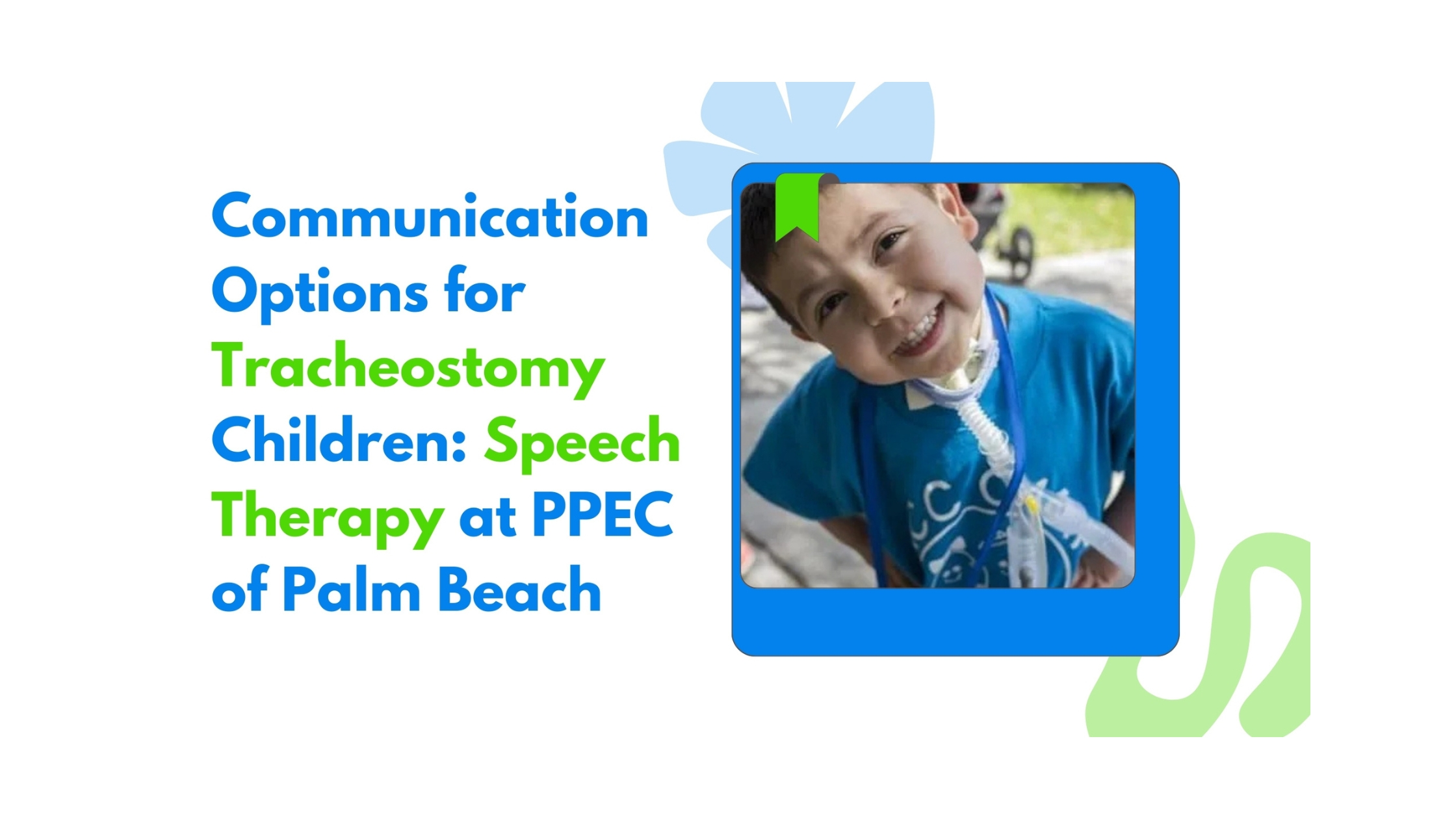
The first few weeks after your child’s tracheostomy placement, silence becomes your new reality. The baby cries; you once complained about it keeping you awake, now you miss their presence. Your toddler’s mouth moves, forming words you can see but cannot hear. That babbling, those first words you’d been eagerly anticipating—all suddenly stolen by a small tube in your child’s throat that saves their life while simultaneously silencing their voice.
The questions surface relentlessly in the middle of sleepless nights: Will my child ever speak again? How do I understand what they need when they can’t tell me what they need? What happens to language development when they can’t practice making sounds? Are we losing precious time while their brain are most ready to learn communication? These fears feel overwhelming, compounded by the already exhausting reality of managing tracheostomy care, equipment, suctioning schedules, and constant medical vigilance.
Many families don’t realize until they connect with specialized services that children with tracheostomies can communicate, can develop language, and many eventually speak, with appropriate intervention from speech therapy for kids trained specifically in working with trach-dependent children. PPEC of Palm Beach provides exactly this specialized support, offering pediatric speech therapy integrated into daily care where communication development happens continuously rather than in isolated weekly appointments. This article examines the communication options available for children with tracheostomies and how speech therapy at PPEC facilitates meaningful connections.
Understanding How Tracheostomy Affects Communication
A tracheostomy creates an opening directly into the trachea below the vocal cords, allowing air to bypass the mouth and nose entirely. While this opening enables breathing when upper airways are blocked or compromised, it fundamentally changes how—or whether—air flows through the larynx, where vocal cords create sound.
When children with tracheostomies exhale, air typically exits through the trach tube rather than flowing upward through the vocal cords, past the tongue and lips, where speech sounds are formed. This means even when children have the cognitive language development, the motor planning, and the desire to speak, the mechanics simply don’t work in the standard way.
The impact extends beyond just spoken words. Crying becomes silent or barely audible. Laughter may be soundless. The natural feedback loop where babies hear themselves babbling and experiment with different sounds—a critical component of typical speech development—gets disrupted. Parents cannot rely on vocal cues to understand their child’s needs, forcing everyone to learn new ways of reading communication signals.
But Tracheostomy Doesn’t Mean No Communication
This is the critical truth that speech therapy for kids with tracheostomies emphasizes: speech is just one form of communication, and multiple pathways exist for meaningful connection and language development. Children with trachs can and do communicate effectively. They can develop age-appropriate receptive language (understanding what others say). They can learn expressive communication through various methods. Many individuals eventually speak, either while the trach remains in place or after it is removed.
The key is providing appropriate intervention early—teaching alternative communication methods while simultaneously working toward verbal speech when possible. This is where specialized pediatric speech therapy becomes essential rather than optional.
Communication Options for Children With Tracheostomies
Speech-language pathologists who specialize in tracheostomy care employ multiple approaches depending on each child’s age, developmental level, medical stability, and family priorities.
Sign Language and Gestures
For infants and toddlers with tracheostomies, sign language becomes a powerful communication tool that doesn’t require airflow through the vocal cords. Teaching basic signs—more, all done, eat, drink, help, mama, dada—gives children agency to express needs and wants before verbal speech becomes possible.
Pediatric speech therapy at PPEC incorporates sign language naturally into daily routines. During mealtimes, nurses and therapists consistently model signs. During play activities, staff pair signs with objects and actions to facilitate communication. This consistent exposure helps children learn that communication has power—when they sign “more,” they receive more of something desirable. This understanding becomes foundational for all future communication development.
Even simple gestures, such as pointing, reaching, or pushing away, become meaningful forms of communication that speech therapy for kids validates and builds upon. Therapists help families recognize and respond to these early communication attempts, ensuring children learn that their attempts to communicate matter and generate responses.
Picture Communication Systems
Picture exchange systems and communication boards offer an alternative pathway for children who are unable to speak yet. These systems utilize photographs or simple drawings that represent common needs, wants, activities, and people in the child’s life. Children learn to point to or hand caregivers pictures indicating what they’re trying to communicate.
At PPEC, speech therapists create personalized communication boards that reflect each child’s unique life—featuring pictures of their favorite toys, foods they enjoy, family members, and daily activities. These boards travel between therapy sessions and daily care activities, with nurses reinforcing their use throughout the day. This integration ensures that communication practice occurs continuously, rather than only during formal therapy sessions.
As children master basic picture communication, therapists gradually increase complexity—adding more vocabulary, introducing simple sentence structures, and teaching children to combine pictures to express more detailed thoughts. These skills lay the foundation for transferring to other communication methods as children develop.
Speech-Generating Devices and AAC Technology
For older children or those with more complex communication needs, augmentative and alternative communication (AAC) devices provide sophisticated communication options. These range from simple single-message devices to complex tablets with text-to-speech capabilities, allowing children to construct detailed messages.
Specialized speech centers, such as PPEC, have experience in matching children with appropriate AAC technology based on their cognitive abilities, physical capabilities, and communication needs. Speech therapists conduct thorough evaluations, trial different systems, provide training to both children and their families, and adjust their approaches as the children’s skills evolve.
The key to AAC success lies in its consistent use across all environments—therapy sessions, classroom activities, mealtimes, and playtimes. When everyone in a child’s life supports and responds to AAC communication, children develop fluency and confidence. PPEC’s integrated care model enables this consistency, with therapists training nursing staff who then reinforce the use of AAC throughout each day.
Speaking Valves and Phonation
For medically stable children with tracheostomies, speaking valves provide the opportunity for verbal speech while the trach remains in place. These one-way valves attach to the trach tube, allowing air to enter through the tube during inhalation but closing during exhalation so air flows upward through the vocal cords, enabling sound production and speech.
Not all children with tracheostomies can safely use speaking valves—medical stability, adequate airflow around the trach tube, and the ability to handle increased respiratory work are all prerequisites. Pediatric speech therapy includes careful evaluation to determine candidacy, gradual trials to build tolerance, and ongoing monitoring to ensure safety.
At PPEC of Palm Beach, speech therapists work closely with nursing staff during speaking valve trials. Nurses monitor respiratory status, oxygen saturation, and signs of distress while therapists work on voice production and speech clarity. This collaboration ensures safety while maximizing opportunities for the development of verbal communication.
For children who successfully use speaking valves, the impact can be profound. Suddenly, they regain their voice—can call out to caregivers, express themselves verbally, laugh audibly, and sing along to their favorite songs. Even partial-day use of a speaking valve provides crucial opportunities for speech practice and social connection through verbal communication.
Capping Trials and Decannulation Preparation
For children whose medical conditions improve sufficiently, the ultimate goal may be tracheostomy decannulation—removing the trach entirely and returning to typical breathing and speaking. Speech therapy for kids plays a crucial role in this process through capping trials, where the trach tube is temporarily capped (blocked), forcing all breathing to occur through the natural airway.
During capping trials, speech therapists assess voice quality, speech clarity, breathing patterns, and communication effectiveness. They help children adjust to using their vocal mechanisms again after potentially months or years of disuse. They address any anatomical or functional changes that occurred during the time the trach was in place.
This decannulation preparation requires close medical supervision and coordination among multiple specialists, including pulmonology, otolaryngology (ENT), nursing, and speech therapy. PPEC’s interdisciplinary model facilitates this coordination, with all team members working toward the shared goal of safe decannulation when medically appropriate.
How Speech Therapy at PPEC Makes a Difference
The specialized speech center model at PPEC of Palm Beach provides distinct advantages over isolated outpatient therapy for children with tracheostomies.
Integration Into Daily Life
The most significant advantage of PEC speech therapy lies in how communication intervention weaves into every moment of a child’s day rather than existing as isolated 30-minute weekly sessions. Speech therapists at PPEC don’t just conduct formal therapy—they train nursing staff, provide communication strategies, create materials used throughout daily routines, and help everyone in the child’s environment support communication development.
When a child learns a new sign during speech therapy, nurses reinforce that sign throughout the day, during meals, diaper changes, and play activities. When a communication board is introduced, it accompanies the child throughout various areas and activities, with all staff modeling and encouraging its use. This consistent practice accelerates learning far beyond what weekly outpatient therapy alone could achieve.
Medical Oversight During Communication Interventions
Working with children who have tracheostomies requires constant attention to medical safety. Speaking valve trials change breathing patterns and respiratory work. Communication activities that increase engagement and excitement can affect oxygen saturation. Even positioning for optimal communication can impact respiratory status.
At PPEC, speech therapy for kids happens under continuous nursing supervision. When therapists trial new communication methods that might affect respiratory status, nurses monitor vital signs and watch for signs of distress. This medical safety net allows therapists to push boundaries appropriately, maximizing communication opportunities while maintaining safety.
Family Training and Support
Parents of children with tracheostomies already manage overwhelming responsibilities—trach care, equipment maintenance, suctioning schedules, and emergency preparedness. Adding a communication intervention to this load can feel impossible without guidance.
Pediatric speech therapy at PPEC includes extensive family training and education. Therapists teach parents which communication methods work best for their child, demonstrate how to integrate these practices into home routines, provide materials and strategies for home use, and answer the numerous questions that arise. This partnership ensures communication development continues beyond PPEC hours, with families feeling confident and supported rather than overwhelmed.
Coordinated Care With Other Therapies
Communication development doesn’t happen in isolation—it connects intimately with cognitive development, motor skills, sensory processing, and social-emotional growth. At PPEC, speech therapists collaborate directly with occupational therapists to address fine motor skills needed for sign language or AAC device use. Physical therapists work on positioning that optimizes respiratory function for speaking valve trials, and nurses manage medical care that impacts everything else.
This coordination creates synergy, where each therapy amplifies the effectiveness of the others. Goals align, strategies complement each other, and children receive unified support toward comprehensive development rather than fragmented interventions that don’t connect.
What Families Should Know About Speech Therapy for Trach-Dependent Children
Early Intervention Matters Profoundly
The critical period for language development happens in early childhood, regardless of whether children can speak verbally. Children with tracheostomies require access to language-rich environments and communication opportunities during these crucial years, even if traditional speech is not yet possible.
Starting speech therapy for kids with tracheostomies early—even in infancy—ensures that language development progresses appropriately through alternative communication methods. At the same time, motor-speech pathways remain available should verbal speech become possible later. Waiting until after decannulation to address communication means missing crucial developmental windows.
Multiple Communication Methods Can Coexist
Many families worry that teaching sign language or introducing AAC devices will prevent their child from learning verbal speech—a myth thoroughly disproven by research. In reality, multiple communication methods support each other rather than hinder one another. Children who learn sign language or AAC often transition to verbal speech more easily because they’ve developed strong language foundations and understand communication’s power.
Specialized speech centers, such as PPEC, employ multi-modal approaches that allow children to access all appropriate communication methods simultaneously, using whichever method works most effectively in different situations while building skills across multiple modalities.
Progress Looks Different for Every Child
Some children with tracheostomies begin using speaking valves within months and achieve verbal communication quickly. Others require years of alternative communication before verbal speech becomes possible. Some individuals may never achieve full verbal communication, but can become highly effective communicators through alternative methods.
Pediatric speech therapy at PPEC acknowledges this variability, setting individualized goals based on each child’s unique abilities and potential, rather than applying universal timelines. Progress is measured by an improved ability to express needs, increased communication attempts, an expanded vocabulary (whether signed, pictured, or spoken), and a reduced level of frustration resulting from being unable to communicate.
Conclusion
The silence that accompanies a tracheostomy feels unbearable at first—the missing cries, the soundless laughter, the words you cannot hear. However, silence doesn’t mean the absence of communication, thought, feeling, or the desire to connect. Children with tracheostomies have just as much to say as any child; they simply need different pathways to express themselves.
Speech therapy for children with tracheostomies provides these pathways—through signs and gestures, pictures and technology, speaking valves when medically appropriate, and eventually toward verbal speech for many children. The specialized pediatric speech therapy at PPEC of Palm Beach integrates communication development into every aspect of daily care, ensuring children receive consistent support from professionals who understand both the medical complexity and the communication possibilities.For families navigating the overwhelming reality of tracheostomy care, PPEC offers something precious—expert guidance in helping your child develop communication despite significant barriers —delivered within a specialized speech center model where medical safety and communication development occur simultaneously. Your child’s voice may sound different from what you imagined or may exist through methods you never anticipated, but with appropriate support, that voice will be heard.