
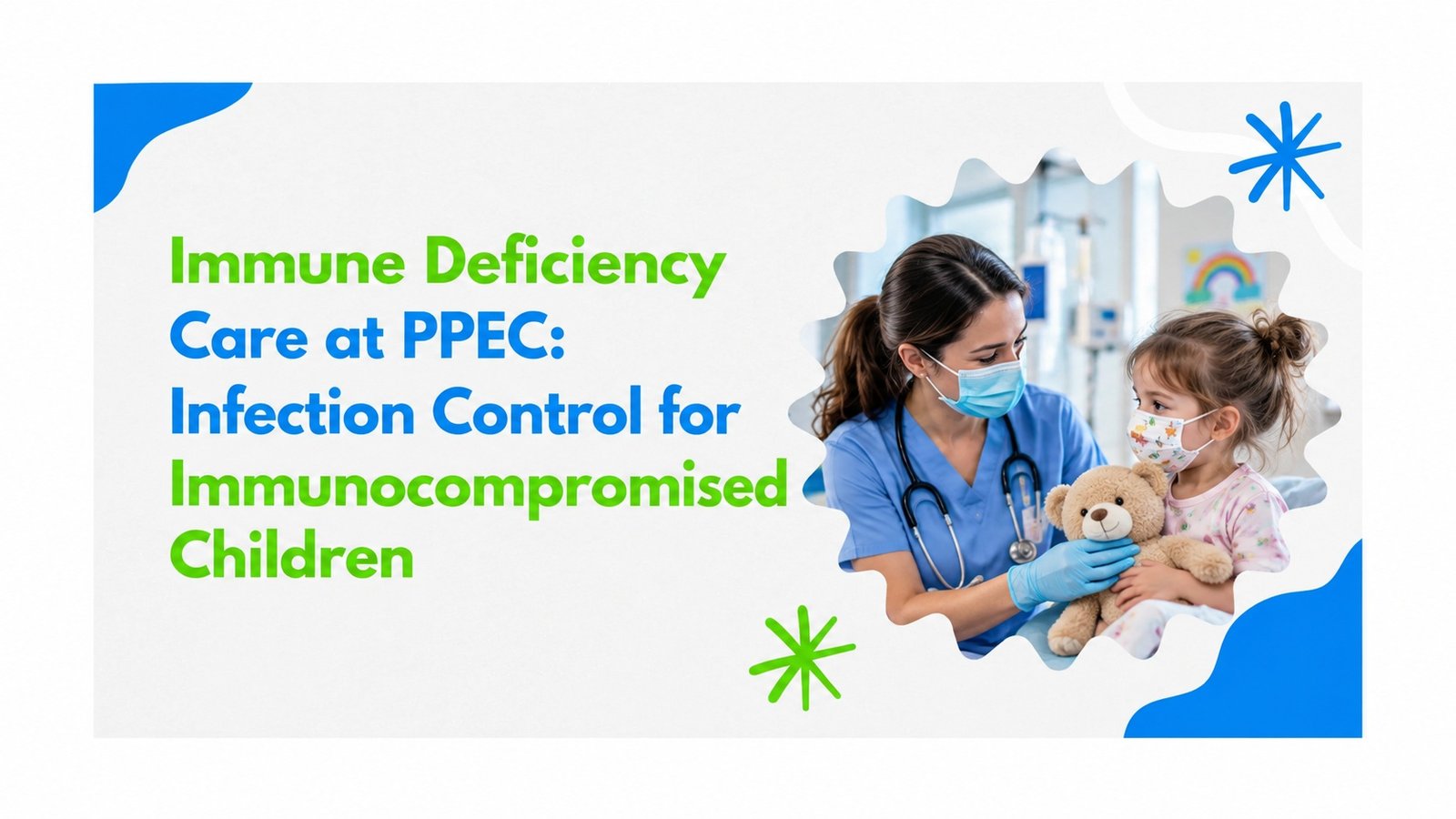
Primary immunodeficiency disorders affect an estimated one in 1,200 children, yet they remain among the most under recognized conditions in pediatric care. Children with these disorders face a fundamentally elevated risk from the bacterial, viral, and fungal infections that circulate through every shared environment, including daycare settings. For these children, the quality of infection control in their care setting is not a secondary consideration. It is a direct determinant of their health outcomes.
At PPEC of Palm Beach, caring for compromised children means operating at a clinical standard that goes well beyond general childcare infection prevention. Through skilled nursing care, children receive specialized medical support, continuous monitoring, and individualized attention designed to meet their unique health needs while maintaining a safe and protective environment. This guide explains what immune deficiency disorders look like in children, why the care environment matters so profoundly, and how PPEC of Palm Beach provides the sanitization, medical expertise, and protection these children require.
Understanding Primary Immunodeficiency in Children
Primary immunodeficiency (PID) refers to a group of more than 400 disorders in which one or more components of the immune system are absent, reduced, or dysfunctional due to genetic causes. Unlike secondary immunodeficiency, which results from external factors such as chemotherapy, HIV, or malnutrition, primary immunodeficiency is present from birth and is rooted in the child’s own genetic makeup.
Children with primary immunodeficiency are significantly more susceptible to bacterial, viral, and fungal infections than typical children. Medically complex children with PID may develop infections more frequently, experience more severe illness from infections that non-compromised children tolerate with mild symptoms, and take longer to recover. Some children with PID are also susceptible to opportunistic infections caused by organisms that do not typically cause disease in those without immunodeficiencies.
Common forms of primary immunodeficiency include:
- Selective IgA deficiency, the most common PID, in which the immune system fails to produce adequate immunoglobulin A, affecting the body’s defense at mucosal surfaces, including the respiratory and gastrointestinal tracts
- Common Variable Immunodeficiency (CVID) is characterized by low levels of immunoglobulins and impaired antibody production, leading to recurrent bacterial infections
- X-linked agammaglobulinemia (XLA), in which B cells fail to develop and antibody production is severely impaired, making affected children vulnerable to serious bacterial infections from infancy.
- Severe Combined Immunodeficiency (SCID), one of the most serious PIDs, in which both T cell and B cell function are profoundly impaired, creating extreme vulnerability to virtually all types of infection
- Chronic Granulomatous Disease (CGD is a condition in which phagocytes fail to kill certain bacteria and fungi after ingesting them, leading to recurrent and severe infections in multiple organs.
Management of primary immunodeficiency is individualized based on the specific underlying diagnosis and the predicted susceptibility pattern. Treatment may include immunoglobulin replacement therapy, antimicrobial prophylaxis, antifungal and antiviral therapy, and, in some cases, curative treatment through stem cell transplantation or gene therapy.
Why the Care Setting Matters So Much
For compromised children, the environment in which they spend their day is not a neutral backdrop; it is an active variable in their health outcomes. A care setting with poor infection control practices, inadequate hand hygiene, or insufficient clinical oversight of illness presentations significantly elevates this population’s risk.
Standard childcare environments, even well-run ones, are among the highest-risk settings for infectious disease transmission. Infection prevention and control in daycare settings require appropriate hand hygiene, thorough environmental cleaning, and proper waste management as essential strategies to reduce transmission among all enrolled children. For a child with an intact immune system, the infections that circulate through a standard childcare setting are manageable inconveniences. For a child with primary immunodeficiency, they can represent genuine medical emergencies.
This is why compromised children with complex medical needs require a care setting specifically equipped to implement and maintain rigorous infection control measures throughout every hour of the day, with licensed clinical staff who can identify early signs of infection and respond before illness escalates.
Infection Control at PPEC of Palm Beach
Environmental Hygiene and Sanitation Protocols
At PPEC of Palm Beach, environmental hygiene is a clinical priority, not just a housekeeping function. As a trusted ppec medical daycare, we follow healthcare-grade cleaning and disinfection protocols to maintain a safe environment for medically complex children. Surfaces, equipment, and shared items are cleaned and disinfected according to healthcare facility standards rather than general childcare cleaning practices. This distinction matters because healthcare-grade disinfection protocols target a broader spectrum of pathogens, use appropriate contact times, and are applied with the frequency required in a setting serving children with complex medical needs.
Specific environmental measures include:
- Regular disinfection of high-touch surfaces, including tables, chairs, equipment handles, and door handles, throughout the day
- Disinfection of all shared developmental and therapy equipment between uses
- Dedicated sanitation procedures for feeding areas and any surfaces involved in nutritional management
- Proper disposal protocols for all medical waste and soiled materials
- Maintenance of clean and soiled zones within the facility to prevent cross-contamination
Hand Hygiene as the Primary Infection Control Measure
Handwashing is consistently identified as the single most effective measure for preventing the spread of infections in childcare and healthcare settings. At PPEC of Palm Beach, hand hygiene is a non-negotiable clinical standard that every staff member consistently follows.
In a specialized care pediatrics PPEC environment, maintaining strict infection control practices is essential to protect medically complex children. Licensed nurses and all care team members perform hand hygiene at every critical point: before and after direct contact with each child; before and after any medical treatment or intervention; after contact with potentially contaminated surfaces or equipment; before preparing or handling food or medications; and after removing gloves. Alcohol-based hand sanitizer is available throughout the facility, and handwashing with soap and water is required whenever hands are visibly soiled or following specific clinical activities.
For compromised children with the capacity to participate, hand hygiene education and practice are incorporated into education and enrichment programming in age- and developmentally appropriate ways, supporting the habit formation that protects these children in every environment they occupy.
Illness Screening and Exclusion Protocols
One of the most important infection control tools in any group care setting is the systematic identification and isolation of individuals who are ill or potentially contagious. At PPEC of Palm Beach, health screenings are conducted upon arrival for every child at the start of each day. Staff arriving for work are also assessed for signs of illness before beginning direct patient contact. Healthcare professionals, including nurses, caregivers, and a pediatric physical therapist, follow strict hygiene and safety protocols to help maintain a healthy environment where children can receive the care and therapy support they need safely.
For compromised children, illness exclusion thresholds are clinically calibrated. A symptom that would be managed conservatively in a typically immune child may represent a significant concern for a child with primary immunodeficiency, and the PPEC nursing team applies individualized clinical judgment, informed by each child’s specific immune profile and physician guidance, to these assessments.
Families of compromised children are contacted promptly when any enrolled child presents with signs of a communicable illness, allowing families to make informed decisions about attendance on days when exposure risk may be elevated.
Personal Protective Equipment
Licensed nursing staff use appropriate personal protective equipment in accordance with standard and transmission-based precautions during clinical care activities. Gloves are used for contact with blood, body fluids, mucous membranes, and non-intact skin. Masks and eye protection are used when splashes or sprays of body fluids are anticipated and during activities that create aerosolized particles. For children with specific isolation requirements prescribed by their physician, the PPEC nursing team implements those precautions in full.
Toy and Equipment Sanitation
Toys and developmental materials shared among children in a PPEC program can serve as a vector for infectious transmission if not managed appropriately. At PPEC of Palm Beach, all shared toys and materials are sanitized regularly using healthcare-grade disinfectants. Items that cannot be effectively cleaned, such as stuffed animals, are not used in shared settings. For compromised children with physician-prescribed restrictions on shared equipment, individualized toy and material sets are maintained.
Individualized Care Plans for Immunocompromised Children
Beyond facility-wide infection control measures, every compromised child at PPEC of Palm Beach has an individualized care plan developed in coordination with their treating immunologist or primary physician. This plan addresses the specific infection risks associated with the child’s immune deficiency diagnosis and establishes protocols governing their care during program hours.
Individualized care plans for compromised children typically address:
- The child’s specific immune deficiency diagnosis and the infection types to which they are most vulnerable
- Immunoglobulin replacement therapy scheduling and administration protocols if the child receives infusions in the care of PPEC.
- Antimicrobial, antifungal, or antiviral prophylaxis medications, including administration timing, routes, and documentation requirements
- Vaccination status and restrictions, noting any live vaccines that are contraindicated and any specific exposure avoidances that follow from this
- Symptoms that require immediate nursing assessment and family notification
- Fever thresholds that trigger physician contact or emergency escalation, which are often significantly lower for compromised children than for healthy children
- Activity modifications when the child’s clinical status or infection risk warrants adjustment
- Communication protocols with the immunology team when clinical concerns arise
These protocols are updated promptly whenever the child’s immunologist makes changes to the management plan, and the nursing team is briefed on any updates before the next program day.
Supporting Development Within Safe Parameters
A common and important concern among families of compromised children is that protecting their child from infection will come at the cost of normal developmental experiences. The Immune Deficiency Foundation affirms that children with primary immunodeficiency should be encouraged to participate in school, activities, and social interaction to the greatest extent possible, as these experiences are important for their self-confidence and overall well-being.
At PPEC of Palm Beach, the goal is not to isolate compromised children from the developmental and social benefits of the program. It is to create an environment in which those benefits can be accessed safely. Infection control measures protect all children enrolled, not just the most vulnerable children. Rigorous hand hygiene, environmental sanitation, illness screening, and clinical oversight create conditions in which compromised children can participate in therapy, developmental programming, and peer interaction with a meaningfully reduced infection risk.
The PPEC nursing and therapy teams work together to design activity participation that respects each child’s immune profile while maximizing their developmental engagement. Physical therapy, occupational therapy, speech and feeding therapy, and social activities all proceed within the parameters established by the child’s physician and family, with infection control measures maintained throughout.
Coordinating With the Immunology Team
Effective care for compromised children at PPEC depends on close coordination with the child’s treating immunologist. PPEC of Palm Beach communicates directly with a child’s family and clinical team to ensure that care protocols within the facility align precisely with the physician’s management approach. Any changes to the child’s treatment are reflected in updated care plans without delay, and clinical observations throughout the day are shared with care providers and the clinical team when relevant.
This coordination is particularly important during periods of heightened infection risk, such as influenza season or when there has been exposure to a communicable illness within the facility. The PPEC nursing team communicates proactively in these situations, ensuring that the clinical team has the information needed to advise on any additional precautions or monitoring that may be warranted.
Families are not required to manage this communication themselves. The PPEC care team facilitates direct communication between the program and the immunology team, reducing the administrative and clinical burden on families who are already managing a great deal.
Conclusion
Immune deficiency disorders place affected children at genuine and ongoing risk of the infectious exposures that are unavoidable in a shared environment. Managing that risk safely while preserving the developmental experiences that every child deserves requires a care setting with the clinical infrastructure, rigorous protocols, and licensed nursing expertise to do both simultaneously.
At PPEC of Palm Beach, compromised children receive individualized, clinically precise care within an infection control framework maintained to healthcare facility standards consistently. If your child has a primary immunodeficiency or other immune deficiency disorder and requires skilled nursing oversight during the day, we invite you to reach out. Safe, expert, and developmentally rich care for your child is exactly what PPEC of Palm Beach is built to provide.
FAQs
Can an compromised child safely attend a PPEC program?
Yes, with the right infection control infrastructure in place. PPEC of Palm Beach maintains healthcare-grade environmental sanitation, rigorous hand hygiene standards, screenings upon arrival, appropriate use of personal protective equipment, and individualized care protocols developed with each child’s immunologist. These measures create a significantly safer environment for compromised children than standard childcare settings and support safe participation in therapy and developmental programming.
What is primary immunodeficiency in children?
Primary immunodeficiency is a group of more than 400 genetic disorders in which one or more components of the immune system are absent, reduced, or dysfunctional. Children with primary immunodeficiency are more susceptible to infections, experience more severe illness, and recover more slowly than non-compromised children. Management is individualized and may include immunoglobulin replacement therapy, antimicrobial prophylaxis, and, in some cases, stem cell transplantation.
How does PPEC of Palm Beach reduce infection risk for compromised children?
PPEC of Palm Beach uses a multi-layered infection control approach, including healthcare-grade environmental disinfection throughout the program day, strict hand hygiene standards applied by all staff at every critical contact point, health screening for all children and staff upon arrival, illness exclusion protocols calibrated to each child’s immune profile, appropriate personal protective equipment use, and sanitization of all shared toys and equipment between uses.
What happens if an compromised child develops a fever at PPEC?
Every compromised child at PPEC of Palm Beach has an individualized care plan specifying fever thresholds and escalation protocols prescribed by their physician. For compromised children, these thresholds are typically lower than for non-compromised children. When a fever threshold is reached, the nursing team assesses the child, notifies the family and physician per the individualized protocol, and escalates to emergency services if the child’s clinical status warrants it.
Does attending PPEC limit what an compromised child can do developmentally?
No. The goal at PPEC of Palm Beach is to create conditions in which compromised children can participate as fully as possible in therapy and developmental programming within clinically safe parameters. Physical, occupational, speech, respiratory, and behavioral therapy all proceed in coordination with the child’s immune profile and physician guidance, with infection control measures maintained throughout. Protecting children from infection and supporting their development are not competing goals at PPEC. They are pursued simultaneously.