
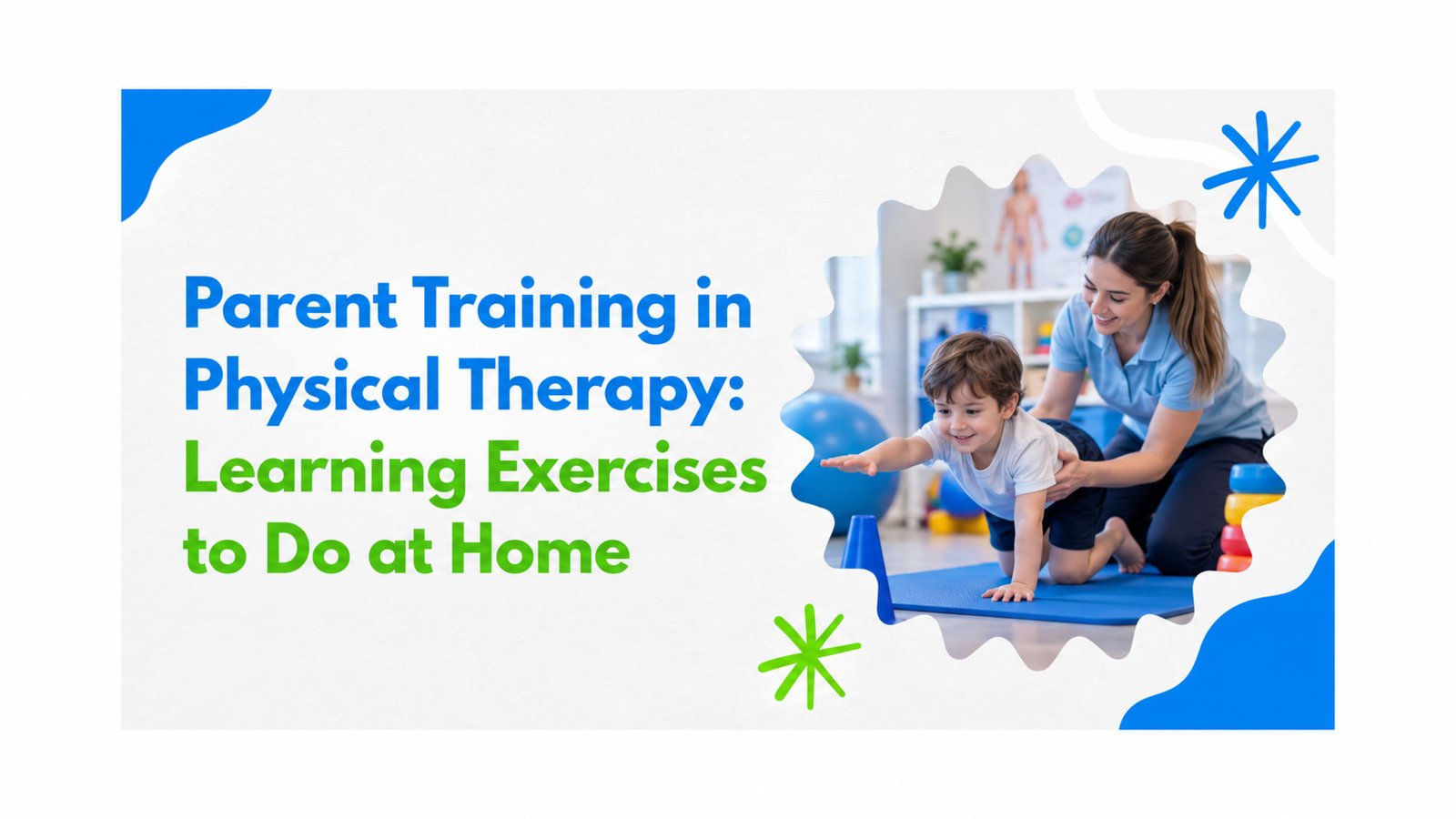
Watching your child work hard in a therapy session, then wondering what happens the moment you walk out the door, is a feeling many parents know well. The truth is, the real impact of physical therapy often happens not in the clinic, but in the small, everyday moments at home: during diaper changes, bath time, playtime on the floor, or the walk from the car to the front door.
For children with medical complexities, growth in strength, mobility, and movement doesn’t come from therapy sessions alone. It comes from consistent, loving practice woven into daily life. That’s exactly what parent training is designed to do, and it’s one of the most powerful tools families have.
At PPEC of Palm Beach, our physical therapists see parents and caregivers as essential partners in a child’s care, not bystanders. Rather than simply treating a child during scheduled sessions, our PTs take the time to teach families how to continue meaningful exercises at home, turning ordinary moments into opportunities for progress. This partnership between therapist and family is often what makes the biggest difference in a child’s journey.
What Is Parent Training in Physical Therapy?
Parent training is exactly what it sounds like: a physical therapist teaching you, the caregiver, the specific exercises, handling techniques, and positioning strategies your child needs, then walking alongside you until you feel confident doing them on your own. It typically includes:
- Hands-on demonstration, where the therapist shows you the exercise while explaining why it matters and what proper form looks like
- Guided practice, where you try the technique yourself while the therapist watches and gently offers feedback
- A home program, a simple written or visual plan outlining what to do and how often
- Problem-solving support, so when something feels hard, whether your child resists or you’re unsure about timing, your therapist helps you work through it together
- Ongoing adjustments, because as your child grows and changes, so does the plan
For families of medically complex children, this isn’t an extra step tacked onto therapy. It’s often the very thing that turns small clinical gains into lasting, real-life progress.
Why Parent Training Matters So Much for Complex Kids
Most children with significant medical needs receive physical therapy for just a few hours each week. The rest of their waking hours, at home, in the arms of a parent, on the living room floor, belong to family life. A child who only practices a new skill during a single weekly session will progress far more slowly than a child whose family gently reinforces that same skill throughout the week.
Research backs this up: children whose caregivers are trained to carry therapeutic strategies into daily life show greater gains in motor function, reach developmental milestones sooner, and experience better long-term outcomes. Just as meaningfully, parent training builds something else, confidence. Many parents feel anxious about handling a child with complex physical needs, worried they’ll do something wrong. Learning these skills directly from a trusted therapist replaces that fear with steady, hands-on assurance.
Parent Training and Direct Therapy: How They Work Together
It’s natural to wonder how the exercises you do at home differ from what happens during your child’s actual PT sessions. Think of them as two halves of the same whole, each supporting the other.
Direct PT sessions
- Primary focus: Skilled assessment, hands-on treatment, and progression of more complex techniques
- Who performs it: A licensed physical therapist
- Typical setting: The PPEC facility
- Best suited for: Introducing new skills, refining technique, and monitoring your child’s response closely
Parent-led home exercises
- Primary focus: Practicing and reinforcing skills your therapist has already introduced
- Who performs it: You, guided by your therapist’s instructions
- Typical setting: Home, woven into daily routines
- Best suited for: Building strength and endurance, and making movement a natural part of everyday life
At PPEC of Palm Beach, our PTs design your home program to mirror exactly what’s happening in direct sessions, so both pieces move your child toward the same goals, together.
Children Who Benefit From Parent Training in PT
Parent training supports families across many different diagnoses, including:
- Cerebral palsy, in which changes in muscle tone and movement patterns benefit from consistent, gentle positioning and stretching at home
- Spina bifida, in which mobility challenges and muscle weakness benefit from daily range-of-motion and strengthening routines
- Prematurity, in which delayed motor milestones benefit from early, consistent handling and positioning support
- Genetic and chromosomal syndromes such as Down syndrome, in which lower muscle tone benefits significantly from ongoing strengthening exercises at home
- Traumatic brain injury, in which coordination difficulties benefit from structured, repetitive practice of everyday movements
- Muscular dystrophy, in which progressive muscle weakness benefits from carefully paced stretching and strengthening
- Orthopedic conditions following surgery or injury, in which healing tissue benefits from gentle, guided mobility exercises at home
What Physical Therapists Teach Parents
Positioning and Handling
How your child is positioned throughout the day, whether during feeding, play, or rest, has a real impact on their development. Our PTs will show you how to position your child safely and comfortably, and how to lift, carry, and move them in ways that support healthy movement patterns rather than reinforce difficult ones. Small adjustments here can make a meaningful difference over time.
Range of Motion and Stretching
Many children with complex needs are at risk of stiff joints or tight muscles simply because of limited movement. We’ll teach you gentle, specific stretches to help your child stay flexible and comfortable, along with guidance on how much is safe and how to recognize if something feels off.
Strengthening Exercises
Building strength in your child’s core, arms, and legs supports everything from sitting up to eventually walking and playing more independently. Our therapists find playful ways to build these exercises into everyday moments, like reaching for a favorite toy from different positions, so strengthening never feels like a chore for you or your child.
Gait and Mobility Training
If your child is working toward walking, or refining the way they already walk, we’ll show you how to support that practice safely at home. This might include tips for using a walker or gait trainer, simple cues to encourage good movement, and easy ways to fold walking practice into your normal routine, like moving from room to room.
Equipment Use
Many children rely on equipment like standers, wheelchairs, orthotics, or specialized seating. We’ll make sure you feel confident setting it up correctly, understand wear schedules, and know what to do if something isn’t fitting quite right, so the equipment actually gets used the way it’s meant to.
Making Home Programs Realistic
We know family life is full, and a home program only helps if it actually fits into your day. That’s why our PTs keep things simple: a few focused exercises done consistently, woven into routines you already have, rather than a long list that feels impossible to keep up with. Two or three exercises done regularly will always outperform ten exercises attempted once and abandoned.
Your home program will also grow with your child. As their abilities change, we’ll revisit and adjust it together, so it never feels stagnant or disconnected from where your child actually is.
Integration Into the Full Day at PPEC
At PPEC of Palm Beach, physical therapy isn’t confined to a single session on the schedule. Our PTs share movement goals and handling strategies with the entire nursing and care team, so safe positioning and mobility support happen consistently throughout your child’s day, not just during PT time.
The same idea carries into your home. A child working on standing tolerance, for example, gets to practice that skill during play, during transitions, and throughout daily routines, supported both by our team and by you. This steady, everyday reinforcement helps children progress in ways that once-weekly outpatient visits alone simply can’t match.
When to Ask for Parent Training Support
You might benefit from more hands-on parent training if you notice:
- Feeling unsure how to safely position or handle your child during daily care
- Not knowing which exercises matter most or how often to do them
- Questions about how equipment should fit or when it should be worn
- A wish to feel more connected to what’s happening in your child’s therapy sessions
- Any sense that progress has slowed or stalled
If your child is enrolled at PPEC of Palm Beach, parent training is already part of how we approach care from day one. Please don’t hesitate to ask questions or request more guidance whenever you need it. That’s exactly what we’re here for.
Conclusion
The most meaningful progress in physical therapy rarely happens in a single hour on a schedule. It happens in the quiet, ordinary moments at home, a stretch during a diaper change, a few extra steps between the couch and the kitchen, a stander used consistently after dinner. These moments, small as they may seem, add up to real, lasting change.
At PPEC of Palm Beach, we see parents as true partners in this work. Our physical therapists don’t just treat your child; they walk alongside you, teaching, adjusting, and cheering on every bit of progress along the way. You don’t have to feel unsure or alone in this process. Reach out to us to learn how our physical therapy program, paired with hands-on parent training, can support your child’s journey, one small, steady step at a time.
FAQs
What does parent training in physical therapy involve?
It means your physical therapist teaches you specific exercises, positioning techniques, and handling strategies, then practices alongside you until you feel confident doing them on your own at home.
Will home exercises replace my child’s physical therapy sessions?
No. Home exercises build on and reinforce what happens during your child’s actual PT sessions. Your therapist introduces new skills in session, and home practice helps those skills stick.
How much time will this add to my day?
Not much. Our therapists design programs around a few brief, meaningful exercises that fit into your existing routine, not lengthy additional sessions.
What if I feel nervous about doing exercises with my child?
That’s completely normal, and you’re not alone. Our therapists guide you through practice until you feel comfortable, and we’re always happy to adjust the plan or answer questions along the way.