
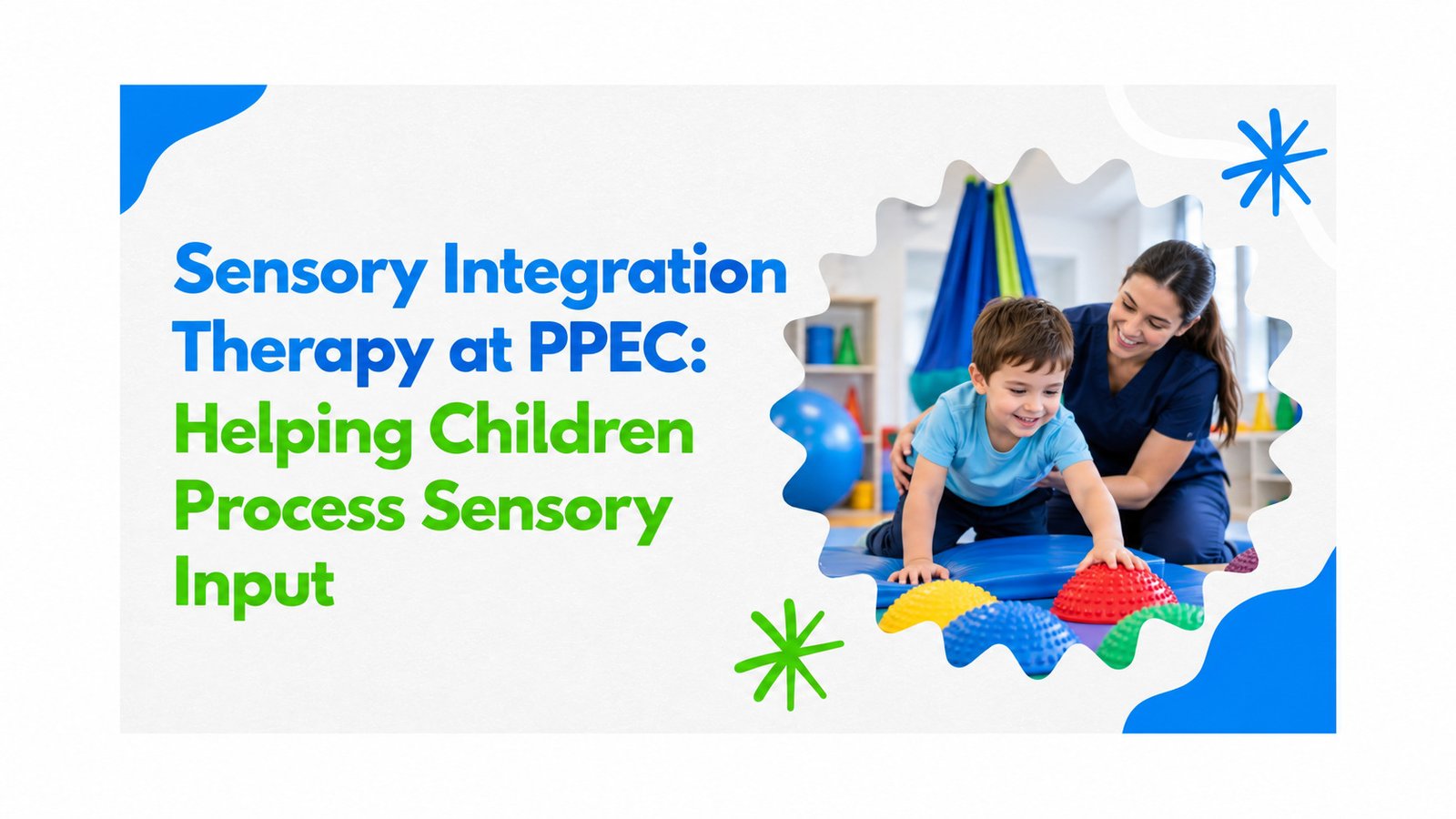
Parenting a child with sensory sensitivities can feel like solving a puzzle with pieces that keep changing. One day, a certain sound is fine; the next day, it triggers tears. You’re doing your best to understand, and that matters more than you might realize.
The truth is, many children with medical complexities experience sensory input- sounds, textures, movement, and light differently than others. Their reactions aren’t random or willful. They’re real responses from a nervous system trying to make sense of an overwhelming world. Sensory integration therapy offers a path forward, helping your child feel steadier and more comfortable, one small success at a time.
At PPEC of Palm Beach, our occupational therapists (OTs) work closely with your child to understand their sensory needs, then build thoughtful, personalized strategies that help them feel calmer, more regulated, and more connected to the world around them.
What Is Sensory Integration Therapy?
Sensory integration refers to the brain’s ability to receive, organize, and respond appropriately to sensory information from the environment and the body. This includes:
- Tactile input, or how a child responds to touch, textures, and physical contact
- Vestibular input, related to balance, movement, and spatial orientation
- Proprioceptive input, the sense of where the body is in space, is often felt through joints and muscles
- Auditory processing, how a child responds to sounds and noise levels
- Visual processing, how a child interprets light, movement, and visual detail
- Oral sensory input, related to taste, texture, and sensations in and around the mouth
For children whose brains process this information differently, everyday experiences can feel either overwhelming or under-stimulating. Sensory integration therapy uses structured, playful activities to help the brain organize this input more effectively, so a child can respond to their environment with greater ease and comfort.
Why Sensory Processing Differences Matter So Much for Complex Kids
Sensory processing differences rarely appear in isolation in medically complex children. They’re often deeply connected to a child’s underlying diagnosis, and they can affect nearly every part of daily life: eating, dressing, sleeping, playing, and connecting with others. A child who becomes distressed by certain textures may struggle at mealtimes. A child who seeks constant movement may have difficulty sitting still for learning or therapy.
When left unaddressed, sensory challenges can lead to increased anxiety, behavioral difficulties, and social withdrawal. But with the right support, many children learn to regulate their responses, tolerate previously distressing input, and even find calm and joy in sensory experiences that once felt unbearable. This is why sensory integration therapy is intentionally woven into each child’s broader care plan at PPEC.
Sensory Integration and Occupational Therapy: How They Connect
Sensory integration therapy is a specialized approach within the broader field of occupational therapy, not a separate discipline. Families sometimes wonder how the two relate to each other.
Occupational therapy (broadly)
- Primary focus: Building skills for daily living, fine motor tasks, and independence
- Includes: Self-care skills, hand strength, coordination, adaptive equipment training
- Approach: Task-specific, goal-oriented skill building
Sensory integration therapy (specifically)
- Primary focus: Helping the brain process and respond to sensory input more effectively
- Includes: Tactile, vestibular, proprioceptive, auditory, and visual regulation strategies
- Approach: Playful, sensory-rich activities designed to build tolerance and regulation
At PPEC of Palm Beach, our OTs blend both approaches, using sensory strategies to support the broader goal of helping a child function comfortably and confidently throughout their day.
Children Who Benefit From Sensory Integration Therapy
Sensory integration therapy supports children across a wide range of diagnoses, including:
- Autism spectrum disorder, in which sensory sensitivities or sensory-seeking behaviors affect daily comfort, and benefit from structured, individualized sensory strategies
- Cerebral palsy, in which altered proprioceptive and vestibular processing affects movement confidence, and benefits from targeted sensory-motor activities.
- Prematurity, in which early sensory experiences affect regulation and benefit from gentle, gradual sensory exposure
- Genetic and chromosomal syndromes such as Down syndrome, in which sensory processing differences affect engagement and benefit from playful, consistent sensory input
- Sensory processing disorder, in which the brain’s response to sensory input is disproportionate to the input itself, and benefits directly from sensory integration therapy
- Feeding difficulties related to oral sensory aversions, in which texture or taste sensitivities affect eating,g and benefit from gradual desensitization approaches
- Anxiety or emotional regulation difficulties, in which sensory overwhelm contributes to distress and benefits from calming, predictable sensory strategies
What Occupational Therapists Do With Sensory Integration
Evaluation and Sensory Profiling
Every child’s sensory journey begins with a thorough evaluation, understanding how they respond to touch, movement, sound, and visual input, and identifying whether they tend to seek out or avoid certain sensations. This sensory profile guides every strategy that follows and is revisited as the child grows and changes.
Building Tolerance Gradually
For children who are overwhelmed by certain sensory input, OTs use gentle, gradual exposure to help build tolerance over time. This might mean slowly introducing new textures during play, or gradually increasing time spent in a slightly noisier environment, always at a pace the child can handle, never forcing an experience before they’re ready.
Providing Calming and Organizing Input
Some children benefit from sensory input that helps their nervous system feel calm and organized, like deep pressure, rhythmic movement, or weighted materials. OTs teach both the care team and families how to use these strategies proactively, before a child becomes overwhelmed, rather than only reactively during distress.
Creating Sensory-Friendly Routines
OTs help build sensory considerations directly into daily routines, adjusting lighting, sound levels, or transition times to reduce unnecessary sensory stress. Small environmental changes, such as softer transitions between activities or predictable routines, can make a significant difference in a child’s ability to stay regulated throughout the day.
Supporting Emotional Regulation
Sensory overwhelm and emotional regulation are closely linked. When a child’s nervous system feels overloaded, big emotions often follow. OTs teach children age-appropriate ways to recognize and communicate when they’re feeling overwhelmed, and teach caregivers how to respond in ways that help the child feel safe and understood.
Integration Into the Full Day at PPEC
Sensory integration strategies work best when they’re part of a child’s entire day, not confined to a single therapy session. At PPEC of Palm Beach, OTs share sensory strategies with the nursing and care team, so calming techniques, sensory breaks, and environmental adjustments are used consistently by everyone who interacts with the child.
A child who becomes overwhelmed by noise, for example, benefits from a predictable, quiet space available throughout their day, not just during a scheduled OT session. This consistency helps children build regulation skills far more effectively than therapy alone ever could.
Home Strategies for Families
Our OTs work with families to bring sensory strategies home, offering simple, practical suggestions such as calming sensory activities before bedtime, safe ways to provide movement input during the day, and gentle approaches to introducing new textures at mealtimes. These strategies are designed to fit naturally into your family’s routine and are adjusted as your child’s needs change.
When to Seek Sensory Integration Support
You might consider a sensory evaluation if you notice:
- Strong distress in response to certain sounds, textures, or lights
- Seeking out intense movement, spinning, or deep pressure
- Difficulty with transitions between activities or environments
- Frequent meltdowns that seem connected to sensory overwhelm
- Avoidance of certain textures during eating, dressing, or play
For children enrolled at PPEC of Palm Beach, sensory needs are assessed as part of ongoing occupational therapy care. Families are always welcome to share concerns and ask questions along the way.
Conclusion
Every child deserves to feel comfortable in their own body and safe in their own world. Sensory integration therapy helps make that possible, not by forcing a child to simply “get used to” overwhelming input, but by gently teaching their nervous system new, more comfortable ways to respond. It’s slow, patient work, and every small win matters.
At PPEC of Palm Beach, our occupational therapists walk this path alongside your child and your family, offering understanding, strategies, and steady support every step of the way. Reach out to learn how our sensory integration program can help your child feel calmer, more regulated, and more at ease in the world around them.
FAQs
What is sensory integration therapy?
Sensory integration therapy is an occupational therapy approach that helps children’s brains process and respond to sensory input, like touch, movement, sound, and light, more effectively, using structured, playful activities.
How do I know if my child needs sensory integration therapy?
Signs may include strong distress to certain sounds or textures, seeking intense movement, difficulty with transitions, or frequent meltdowns due to sensory overwhelm. An occupational therapy evaluation can help clarify your child’s needs.
Is sensory integration therapy the same as occupational therapy?
Not exactly. Sensory integration is a specialized approach within the broader field of occupational therapy, focused specifically on how the brain processes sensory input.
Can sensory strategies be used at home?
Yes. PPEC occupational therapists provide families with practical, easy-to-follow sensory strategies that naturally fit into daily home routines.