
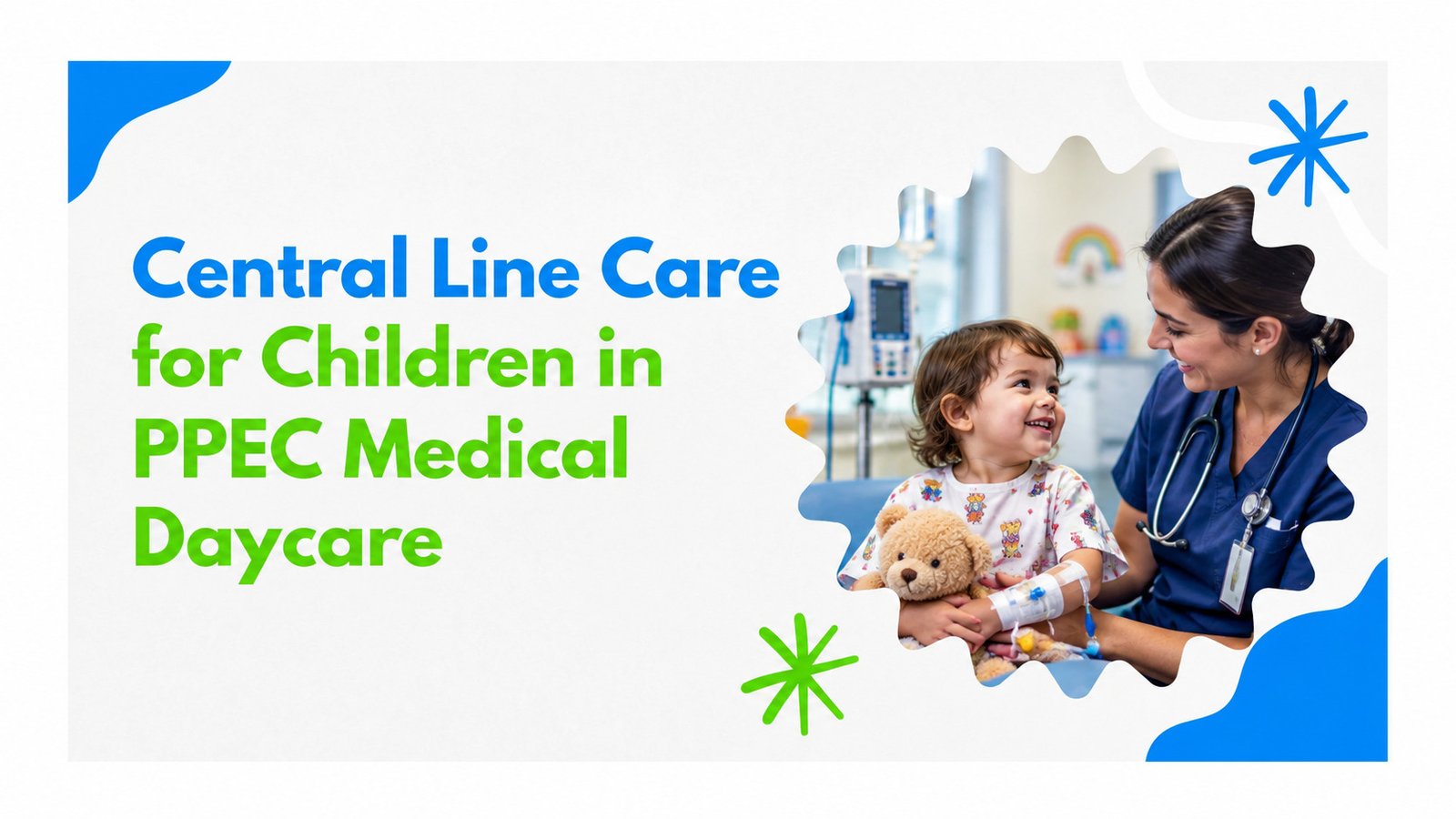
For families of children with central lines, daily life includes an extra level of attentiveness and management that is incredibly important. A central line is a lifeline, delivering medications, nutrition, or fluids directly into a major vein. However, central lines can create a real risk if not cared for with precision. Every dressing change, every flush, every moment of handling matters. If you’ve ever felt the weight of trying to keep that risk as low as possible, day after day, you know exactly how much attention this kind of care demands.
This is precisely where skilled, consistent nursing care becomes so essential. Central line care isn’t something that can be managed casually or inconsistently. It requires trained hands, strict infection-control practices, and constant vigilance, exactly what a PPEC medical daycare setting is built to provide.
What Is a Central Line, and Why Would a Child Need One?
A central line, also called a central venous catheter (CVC), is a thin, flexible tube inserted into a large vein, typically in the chest, neck, or groin, that leads to a major blood vessel near the heart. Unlike a standard IV, central lines are designed for longer-term use and can safely deliver treatments that would otherwise irritate smaller veins.
Children may need a central line for several reasons, including:
- Long-term intravenous (IV) nutrition, known as total parenteral nutrition (TPN), for children unable to receive adequate nutrition orally or through a feeding tube
- Frequent or long-term medication administration, such as antibiotics, chemotherapy, or other treatments requiring consistent IV access
- Regular blood draws, reducing the need for repeated needle sticks in children with chronic conditions
- Fluid management for children with conditions requiring careful, ongoing hydration support
Because central lines provide direct access to the bloodstream, they also come with a heightened risk of infection, making skilled, consistent care essential.
Why Central Line Care Requires Such Careful Attention
A central line bypasses the body’s natural defenses at the skin’s surface, creating a direct pathway into the bloodstream. This means even small lapses in care- a missed hand wash, an improperly sealed dressing, a rushed flush- can introduce bacteria and lead to serious bloodstream infections, often referred to clinically as a central line-associated bloodstream infection, or CLABSI.
For medically fragile children, these infections aren’t just inconvenient. They can escalate quickly and become life-threatening. This is why central line care follows strict, standardized protocols, and why consistency in who provides that care, and how, matters so much.
What Central Line Care Involves at PPEC
Dressing Changes
Central line dressings must be changed on a regular schedule, or sooner if they become wet, loose, or visibly soiled. PPEC nurses follow strict sterile technique during every dressing change, carefully cleaning the site, inspecting for any signs of redness, swelling, or drainage, and applying a fresh, secure dressing to protect the site from contamination.
Line Flushing
Central lines require regular flushing with saline or other prescribed solutions to prevent clot formation and keep the line functioning properly. PPEC nurses flush lines according to each child’s specific care plan, using proper technique to avoid introducing air or bacteria into the line.
Infection Monitoring
Nurses continuously monitor the central line site and the child’s overall condition for early signs of infection, including redness, warmth, swelling, drainage, or fever. Catching these signs early allows for prompt medical intervention, often preventing a localized issue from becoming a more serious bloodstream infection.
Medication and Nutrition Administration
For children receiving medications, fluids, or nutrition through their central line, nurses administer these treatments precisely as prescribed, monitoring for any reaction and ensuring proper technique throughout to protect the line’s integrity.
Handling and Activity Precautions
Central lines require careful handling during daily activities, play, and therapy sessions to avoid accidental dislodgment or damage. PPEC nurses communicate these precautions to the entire care team, including therapists, so that every part of a child’s day, not just nursing care, accounts for the central line safely.
Why PPEC’s Team-Based Model Matters for Central Line Care
Central line care benefits enormously from consistency, and PPEC’s structure is built to provide exactly that. Rather than depending on a single nurse’s schedule, PPEC of Palm Beach maintains a full team of trained nurses and healthcare professionals, including a pediatric physical therapist, throughout the day, ensuring central line protocols are followed with the same rigor and attentiveness no matter who is directly providing care at any given moment.
This team-based approach also means faster recognition of potential issues. With multiple trained eyes throughout the day, subtle signs of infection or line complications are less likely to be missed, offering families an added layer of safety and reassurance.
Integration Into the Daily Schedule
At PPEC of Palm Beach, any extra considerations that come with having a central line are included in planning the activities and therapies that occur each day. Nurses coordinate closely with therapists and other care team members, ensuring that play, movement, and therapy activities are adapted as needed to protect the line while still supporting the child’s full participation.
This integration allows children with central lines to engage fully in therapeutic and social activities, without central line safety becoming a barrier to development and connection.
Children Who Benefit From Central Line Care at PPEC
Central line care at PPEC of Palm Beach supports children with a range of medical needs, including:
- Short bowel syndrome or other conditions requiring long-term total parenteral nutrition (TPN)
- Chronic illnesses requiring frequent or long-term IV medication administration
- Oncology diagnoses requiring central line access for treatment
- Conditions requiring frequent blood draws or lab monitoring
- Complex fluid or electrolyte management needs requiring ongoing IV access
Beyond PPEC: Signs Parents Should Watch For at Home
While PPEC nurses handle daily central line care, families should also understand key warning signs, including:
- Redness, swelling, or warmth at the central line site
- Drainage or unusual odor from the site
- Fever without another clear cause
- Visible damage or dislodgment of the line
- Increased fussiness, lethargy, or changes in behavior that seem unusual for your child
If you ever notice these signs, whether at home or during your child’s time at PPEC, prompt communication with the care team is essential.
Conclusion
Caring for a child with a central line means the family should not have to carry that weight alone. At PPEC of Palm Beach, our nurses bring the training, consistency, and attentiveness that central line care demands, giving your child the safety they need and giving you the reassurance you deserve.
Reach out to learn more about how our nursing team supports children with central lines, one carefully managed detail at a time.
FAQs
What is a central line, and who may need one?
A central line is a catheter placed in a major vein, used for long-term IV nutrition, medication administration, frequent blood draws, or fluid management in children with complex medical needs.
How often are central line dressings changed at PPEC?
Dressings are changed on a regular schedule determined by your child’s care plan. They may be changed more frequently if they become wet, loose, or soiled. PPEC nurses always use sterile techniques when handling a child’s central line dressing.
What are the risks associated with a central line to watch out for?
The primary risk is bloodstream infection, since the line provides direct access to the bloodstream. Careful, consistent care, following standardized infection-control practices, significantly reduces this risk.
How does PPEC ensure consistent central line care throughout the day?
PPEC of Palm Beach uses a team-based nursing model, ensuring trained staff are always present and following the same protocols, regardless of shift changes or individual nurse schedules.