
When your medically complex child is left in a new environment with new people caring for them, one of the hardest parts for parents is the unknown. For parents and families, the understanding of what goes on throughout your child’s day can help to ensure a smooth transition at home and provide peace of mind. PPEC of Palm Beach understands just how much sharing these details, no matter how small, matters to you and your child. We ensure that open communication remains a part of our standard routines from the moment your child enters our facility to when they leave for the day.
Why This Communication Carries So Much Weight
For children with complex medical needs, it’s important for the quality of care received to be standardized across environments, and communication between all care providers sets these standards. . What happens at PPEC affects decisions made at home, and what happens at home shapes how nurses interpret what they see during the day. A seizure at home the night before changes how closely a nurse watches for the rest of the week. A medication dose adjusted at PPEC needs to be communicated clearly enough that parents can watch for the same effects overnight.
This two-way flow of information is what keeps a child’s care consistent across every setting they move through, rather than fragmented into disconnected pieces that no single person fully sees. When communication breaks down between caregivers, the research on pediatric handoffs is fairly blunt about what happens: information gets lost, and errors follow close behind. PPEC works hard to make sure that doesn’t happen here.
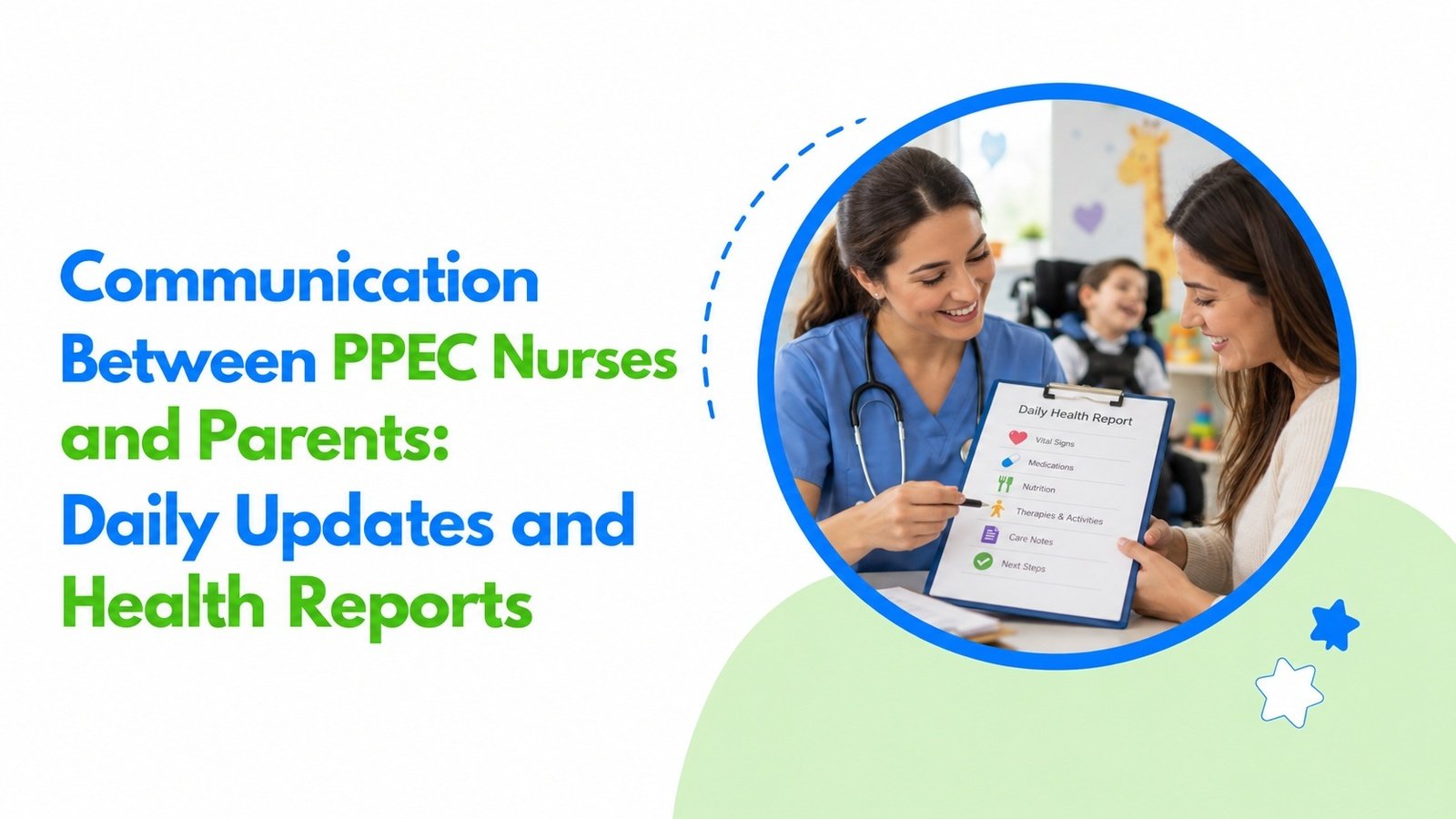
What a Typical Daily Report Actually Covers
Every child enrolled at PPEC has some form of daily reporting, though what’s included and how often it happens depends on that child’s individual needs. A daily report generally touches on a few consistent areas:
- Vital signs and general condition, including any readings that fell outside the child’s normal range
- Medications given, including scheduled doses, any PRN medications administered, and the reason behind them
- Feeding and nutrition, especially for children on tube feeds or with specific dietary needs
- Therapy participation, noting how the child engaged with physical, occupational, or speech therapy sessions that day
- Mood, behavior, and activity level, particularly any noticeable changes from the child’s usual baseline
- Sleep or rest periods, if relevant to the child’s schedule and condition
Not every category applies to every child, and the level of detail varies. A child with a seizure disorder might have detailed notes on any seizure activity and its duration, while a child without that history wouldn’t need the same section filled in daily.
How Nurses Know What’s Important to Flag
Not everything that happens during the day makes it into a highlighted update, and that’s intentional. Nurses are trained to distinguish between routine variation, which gets documented but doesn’t necessarily require an immediate call home, and meaningful changes that parents need to know about right away.
A slightly shorter nap or a smaller appetite at lunch may be noted in the chart. A new cough, a missed feeding, an unusual vital sign reading, or any change from the child’s normal behavior typically triggers a more direct conversation, either by phone during the day or as a flagged item at pickup. The goal isn’t to overwhelm families with every small detail, but to make sure nothing significant slips through simply because it seemed minor in isolation.
The Different Ways PPEC Nurses Stay in Touch
Families don’t all want the same communication style, and PPEC accommodates that rather than forcing a single format on everyone. Depending on preference and the child’s needs, updates might come through a phone call during the day for anything time-sensitive, a written daily report shared at pickup, or through a secure parent portal, or an in-person conversation when a parent arrives to collect their child.
For anything urgent, such as a significant change in a child’s condition, a seizure, or a medication reaction, nurses call immediately rather than waiting for the end of the day. Routine updates, on the other hand, are usually saved for the daily report so that pickup conversations don’t turn into a rushed recap of everything that happened over several hours.
Why Consistency in Reporting Matters More Than It Seems
A single day’s report is useful, but the real value builds over time. When the same details are tracked and communicated consistently, whether that’s feeding tolerance, seizure frequency, or medication side effects, patterns become visible that a single day’s snapshot would never reveal.
This is especially important heading into physician appointments. A parent who can describe not just “she’s been having some trouble eating” but “she’s had reduced intake at lunch three days this week, starting the day after her new medication began” gives the physician something far more actionable to work with. That level of detail is only possible when both the daily reports from PPEC and the observations at home are consistently tracked and shared.
What Parents Can Do to Strengthen the Loop
Communication works best as a two-way street, and there’s a lot parents can contribute that makes a real difference in how well nurses can care for a child during the day.
- Share anything unusual from the night or morning before drop-off, even if it seems minor, such as a restless night, reduced appetite, or a new symptom.m
- Let the team know about any changes made by outside physicians, including new medications, dosage adjustments, or upcoming procedures.
- Ask questions about anything in the daily report that isn’t clear, rather than assuming it will sort itself out.
- Flag your preferred communication method early on, so updates reach you in the way that actually works for your schedule.
- Nurses rely on this information just as much as families rely on the daily report. A child’s care is really being managed jointly, even though the caregiving happens in two different places.
When Something Needs Immediate Attention
Certain situations warrant a phone call as soon as they happen, rather than waiting for pickup. These typically include a seizure outside the child’s usual pattern, a significant drop in oxygen saturation or other vital-sign concerns, a reaction to a new medication, an injury, or any change that a nurse’s clinical judgment flags as needing a parent’s immediate input or awareness.
In these moments, the goal is to give parents enough information to make quick, informed decisions, not to alarm without context. A nurse calling about a seizure will typically already have the next steps in motion and will explain what’s being done alongside what happened. Hence, the conversation is informative rather than purely stressful.
Conclusion
Communication between PPEC nurses and parents is one of the threads that holds a medically complex child’s care together across two very different environments. It takes consistent daily reporting, clear judgment about what needs immediate attention, and a genuine two-way exchange of information rather than a one-directional update. If you have questions about how communication works for your child specifically, or want to adjust how you receive updates, reach out to the PPEC Palm Beach team directly.
FAQs
How often will I hear from my child’s nurse during the day?
It depends on your child’s needs and any urgent situations that arise. Routine updates are typically shared via a daily report at pickup or through a parent portal, while urgent issues, such as a seizure or a significant change in condition, prompt an immediate phone call.
What information is included in my child’s daily report?
Most reports cover vital signs, medications administered, feeding and nutrition, participation in therapy, and any changes in mood, behavior, or activity level. The exact content depends on your child’s specific medical needs and care plan.
How do nurses decide what to tell me right away versus what goes in the daily report?
Nurses distinguish between routine variation, which is documented but doesn’t require an immediate call, and meaningful changes, such as new symptoms, unusual vital signs, or medication reactions, which are communicated as soon as they occur.
Can I choose how I receive updates about my child?
Yes. PPEC accommodates different communication preferences, including phone calls, written daily reports, secure parent portals, and in-person conversations at pickup. Let the nursing team know what works best for your schedule.
What should I tell the nursing team before drop-off each day?
Mention anything unusual from the night or morning before, including a restless night, reduced appetite, or a new symptom, as well as any changes made by outside physicians. This context helps nurses interpret what they observe more accurately during the day.